


Turn Your Design Reference into Production Specifications
Jaktuno reviews varsity jacket designs for apparel brands, private-label buyers, wholesalers and school or teamwear suppliers. Development can begin with a complete tech pack, drawings, reference images or a physical garment.
Before sampling, we identify the information needed to define the jacket: construction, measurements, materials, colors, decoration, trims and packing. An image can establish a visual direction, but hidden details such as lining, pocket construction and seam arrangements require separate confirmation.
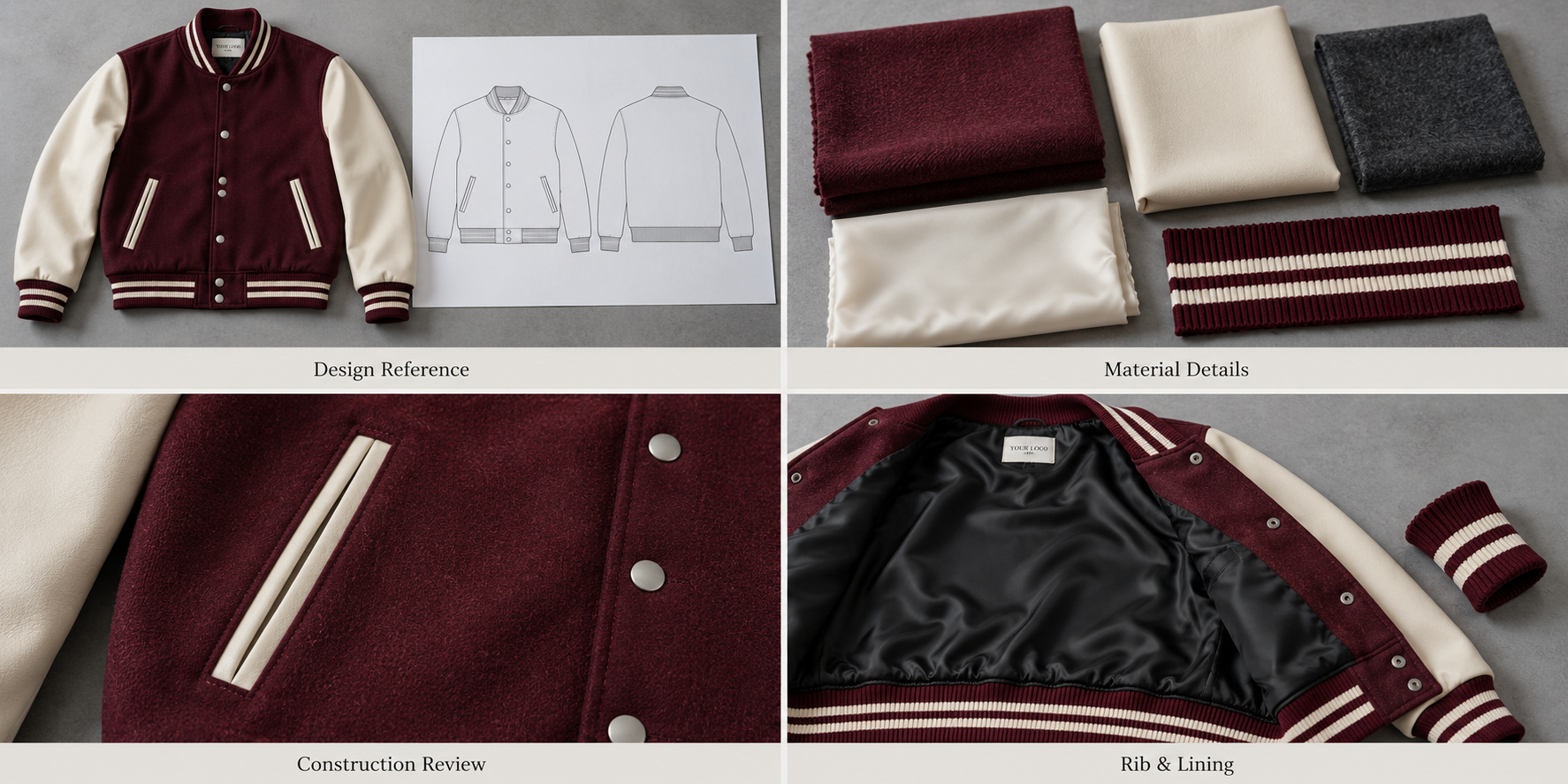
Review Construction and Material Details
The development brief should distinguish body fabric from sleeve material and specify the intended lining, rib, closure and pocket structure. These choices influence pattern work, garment weight, decoration compatibility and quotation.
For mixed-material jackets, we review how the selected panels connect and whether the reference appearance matches the proposed materials. Wool blends, PU and genuine leather need clear descriptions rather than general terms such as “wool jacket” or “leather sleeves.” Our fabric and material options help resolve material choices before the specification is finalized.
 Define Measurements and Size Grading
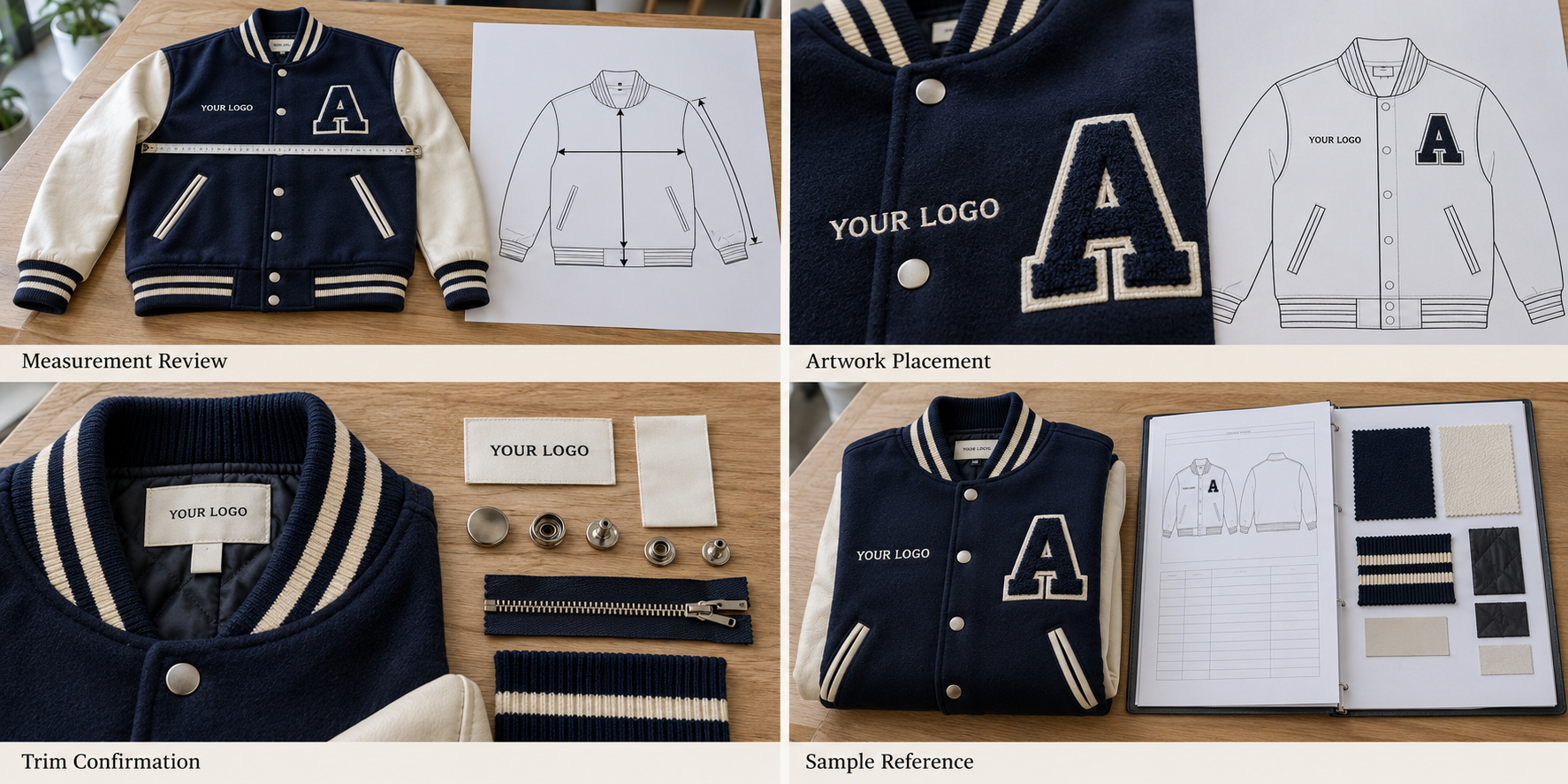
A usable measurement chart identifies where each measurement is taken, the required dimensions and agreed tolerances. Chest width, body length, shoulder position, sleeve length and opening dimensions should relate to the intended fit.
For oversized jackets, we review chest ease, shoulder drop and sleeve volume together. Increasing every measurement equally may change the proportions rather than achieve the desired silhouette. The sample provides a reference for confirming the base size before pattern making and size grading are prepared for the ordered range.
Record Artwork, Trims and Label Positions
Decoration instructions should include artwork files, dimensions, colors and placement references. We check embroidery and patches against seams, pockets, closures and panel boundaries so the proposed position is workable.
The specification also records snap buttons, zippers, woven labels, size and care labels, and hangtag requirements. Where several versions are planned, differences should be identified by style or color rather than left in separate messages. Clear version information helps prevent an earlier design from being used during sampling or production.
Confirm Revisions Before Bulk Production
The sample is reviewed against the current specification for fit, materials, construction and branding. Requested changes should identify the affected detail and the revised requirement. We update the working information so the approved sample and written instructions agree.
Through sample development, unresolved points are addressed before bulk approval. Once materials, measurements, artwork, trims and packing are confirmed, later changes require a review of cost and delivery effects.
 Prepare Information for Quotation and Sampling
Send your design files or reference garment, quantity by style/color, size range, material preferences and decoration requirements. Include packaging, destination and target delivery date. Mark undecided items for review.
Sample development normally takes around 7–15 days, depending on material availability and development complexity. Missing specifications, new trims or repeated revisions can extend that schedule. MOQ and bulk timing are assessed from the confirmed jacket requirements.