


Preparing Bulk Jackets for Delivery
Packing and export preparation connect completed varsity jacket production with the buyer’s receiving requirements. For private label brands, wholesale importers and teamwear suppliers, the priorities are garment protection, correct assortments and shipment information that matches the order.
We confirm packing instructions before bulk packing begins. Jacket thickness, sleeve material, raised decoration and destination handling requirements influence folding, bag selection and carton capacity. A packing arrangement developed for lightweight satin jackets may not suit wool-blend styles with contrast sleeves and chenille patches.
Folding Jackets Without Damaging Decoration
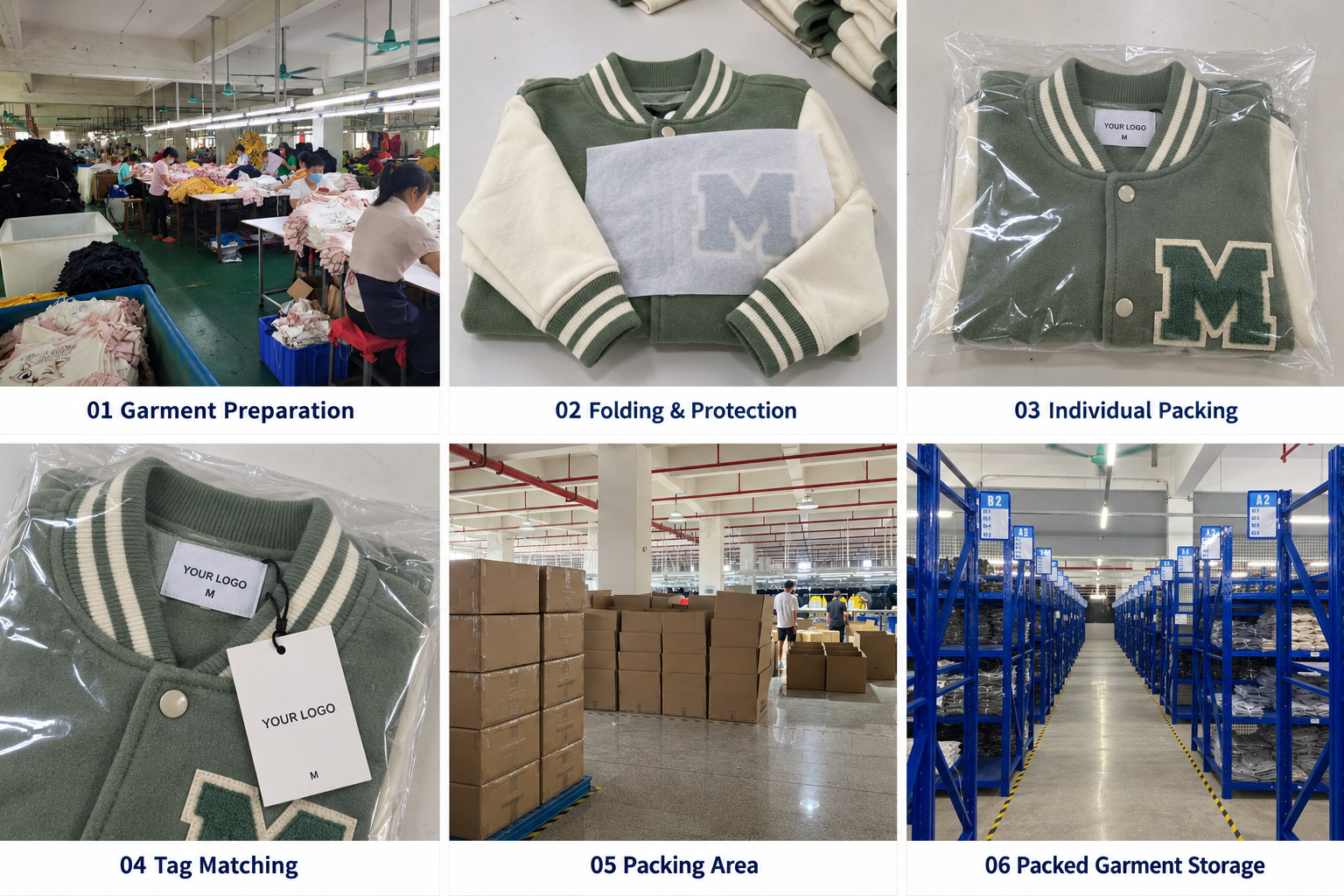
Jackets should be clean, sufficiently dry and cooled after finishing before they enter individual packaging. Folding follows the agreed presentation while avoiding unnecessary pressure on patches, embroidery, snap buttons and zipper components.
Sleeves are arranged to reduce sharp folds, particularly where coated or leather materials require careful handling. Protective tissue or separation between decorated surfaces can be considered when needed. Jackets should not be compressed simply to fit a smaller bag or increase carton quantities.
The packing sample provides a practical reference for how the garment should arrive.
 Confirming Bags, Hangtags and Packing Labels
Individual bags are selected around the folded garment’s dimensions and thickness. Plain or branded options depend on the agreed order requirements and packaging availability. Bag closures should hold the garment securely without catching fabric or decoration.
Hangtags, size stickers and packing labels must match the style, color and size inside the bag. Buyer-supplied artwork and label information are confirmed before printing. Barcode labels are added only when valid data and placement instructions have been provided.
Requirements developed through custom packaging should be finalized early, since printed materials can have separate minimum quantities and preparation times.
Sorting Sizes and Building Carton Assortments
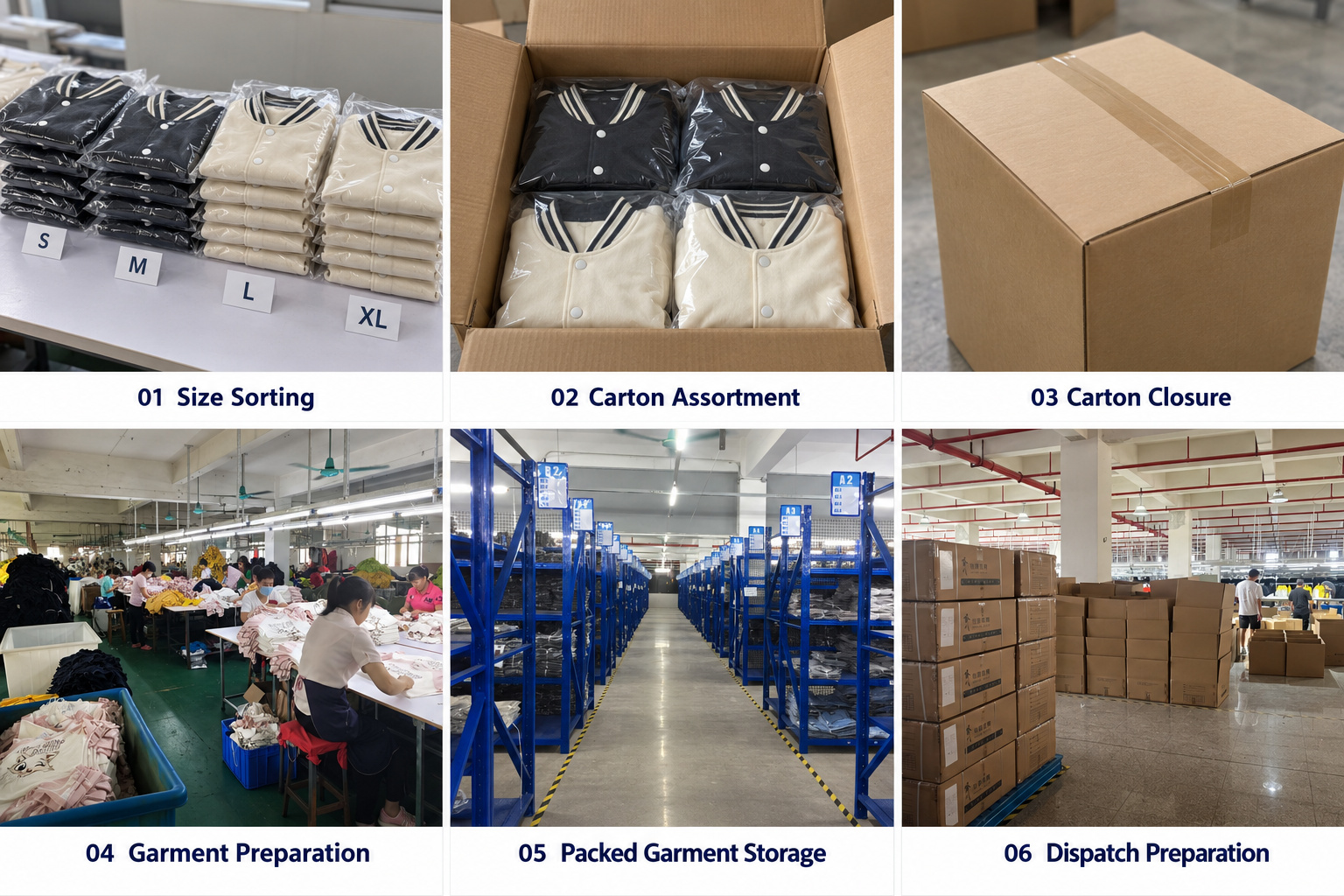
Garments are grouped according to the buyer’s packing plan: single-size cartons, mixed-size assortments or another confirmed arrangement. Clear sorting helps prevent receiving errors, especially when similar colors or multiple private label styles share a shipment.
Carton quantity depends on garment volume, packing method and manageable handling weight. We review the actual packed jackets rather than assuming one carton capacity for every style.
Carton identification should correspond with the packing list. Carton numbers, quantities and size breakdowns are reconciled before sealing, with any shortage or approved quantity adjustment recorded.
Reviewing Carton Protection and Packing Accuracy
Export cartons need to suit the shipment method and expected handling. Jackets should fit without excessive compression or large empty spaces that allow movement. Additional protection is discussed where the route or buyer’s requirements call for it.
Packing checks cover bag condition, garment identity, accessories, carton assortment and carton condition. These checks follow the agreed final inspection arrangements; packing accuracy and garment acceptance are related but separate responsibilities.
 Coordinating Shipment Information and Handover
Before dispatch, shipment details are coordinated with the buyer or nominated forwarder. Commercial invoice and packing-list information must reflect the agreed transaction and packed quantities. Additional documents are confirmed according to the destination and order scope.
Please provide the delivery destination, preferred shipment method, packing instructions and required arrival date when requesting a quotation. Production completion, inspection release, freight booking and transit time are separate milestones. Confirming these early helps us plan the handover and identify packaging costs or documentation requirements before the bulk order is finalized.