


Turning Your Design into a Production Pattern
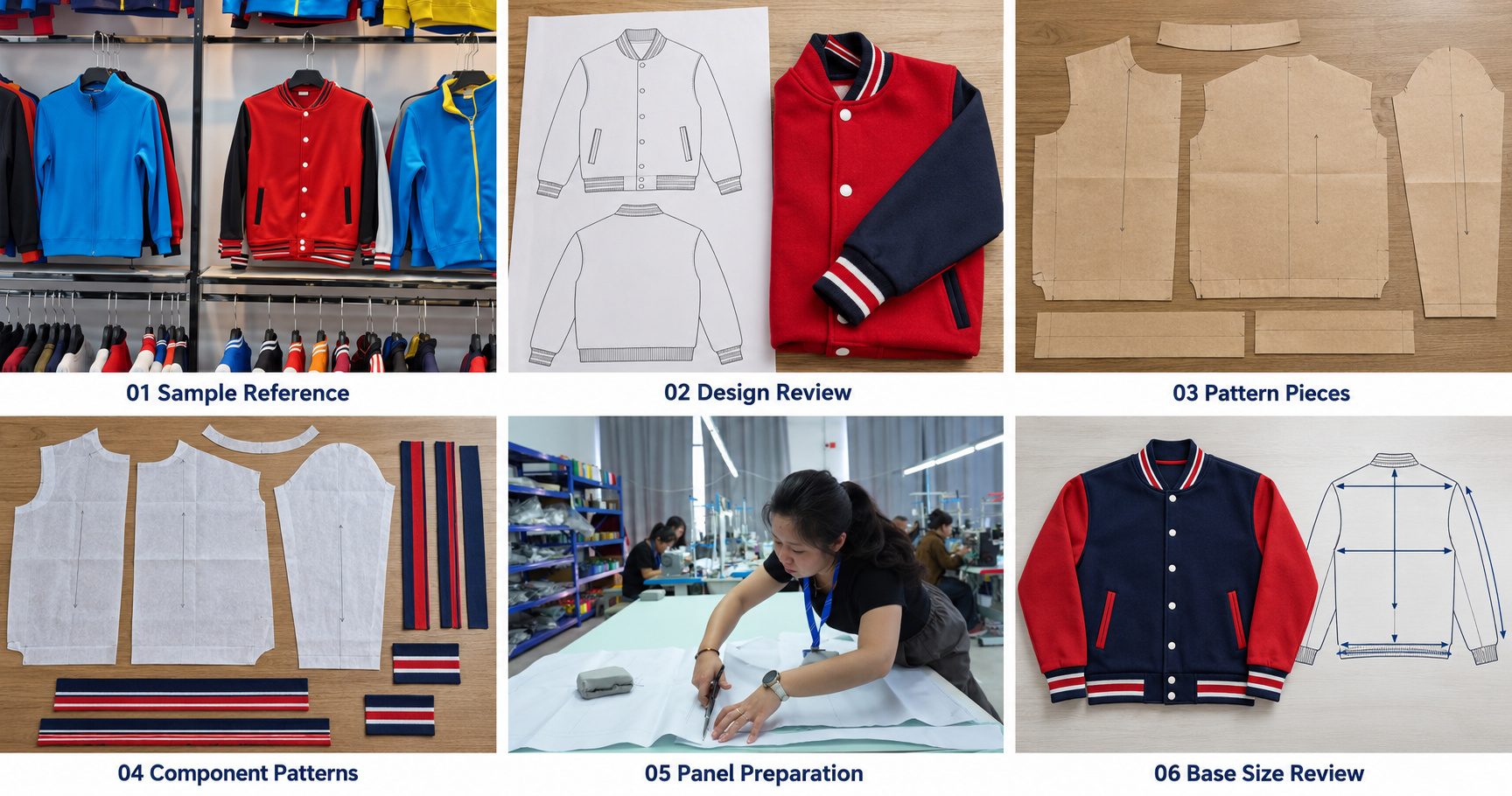
Pattern making defines how a varsity jacket fits and how its components join together. For clothing brands, private label buyers and teamwear suppliers, this stage translates the design reference into body, sleeve, lining, pocket and rib attachment requirements.
We review your tech pack, measurement chart or reference garment before developing the pattern. A photograph can communicate styling, but it cannot establish chest width, sleeve shape, shoulder position or wearing ease. These points need confirmation during development.
Where specifications are incomplete, we identify the missing details before proceeding. Our design and tech pack development page explains the information needed to establish a workable starting point.
Establishing the Base Size and Fit
The base size provides the starting pattern for sample development. Buyers should confirm whether the jacket needs a regular, relaxed or oversized fit, together with the intended size range and market.
Key measurements include chest width, body length, shoulder width, sleeve length, upper sleeve width and hem opening. Measurement instructions must state where each dimension is taken and whether the garment is measured relaxed or extended, particularly around rib sections.
Fit also depends on construction. Sleeve shape, armhole depth, lining allowance and rib proportions influence movement and the jacket’s silhouette. A wider chest alone does not create a balanced oversized fit.
 Adjusting Patterns for the Selected Materials
Patterns need to account for the selected body fabric, sleeves and lining. Thick wool blends, lighter satin and structured denim can produce different results from the same initial pattern. PU and genuine leather sleeves also require material-specific construction review.
Seam allowances, turning space and the junctions between body, sleeve and rib components need attention during sampling. Any shrinkage allowance should be based on the actual material assessment or agreed testing, rather than an assumed percentage.
Material changes after fit approval may require another sample review. Confirming the intended production materials early reduces avoidable pattern revisions.
Grading Across Your Size Range
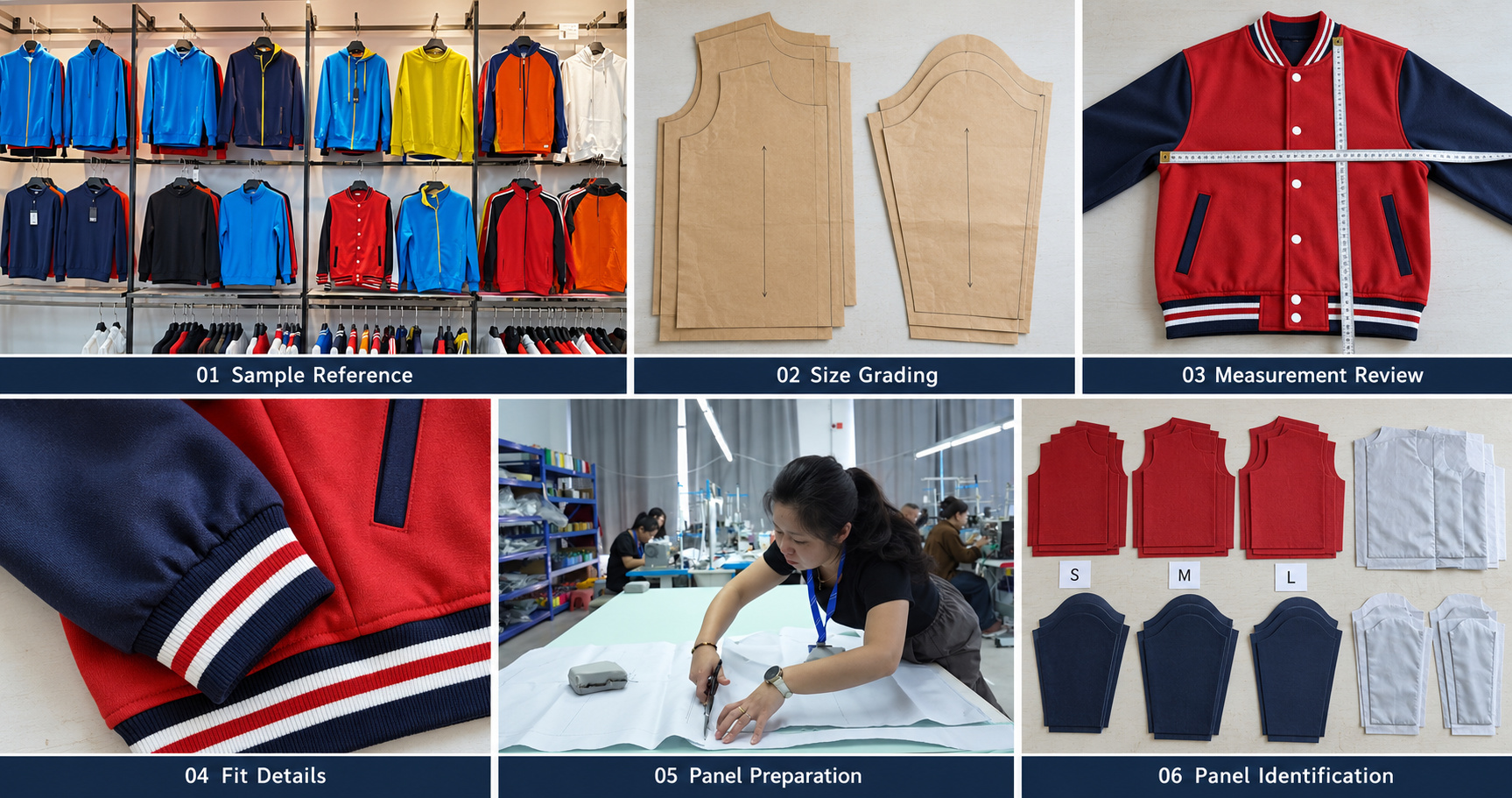
Size grading develops the confirmed base pattern into the requested sizes. The increments should follow the buyer’s measurement chart and fit requirements. Increasing every dimension by the same amount can distort sleeve proportions, pocket placement and overall balance.
Chest width, length, shoulders and sleeves need coordinated grading. Rib lengths and lining patterns must also remain compatible with the corresponding garment size.
For youth, adult or extended size ranges, discuss whether separate base patterns or additional fit samples are needed. Our color and size customization page covers size range and order assortment planning.
Reviewing Samples Before Bulk Cutting
The sample is measured against the agreed chart and reviewed for fit, movement and construction. Comments should identify the measurement or pattern area requiring adjustment, with clear photographs where useful.
After revisions, the updated pattern, measurement chart and sample reference need to agree. Depending on the size range, additional sizes may require checking before production. This review forms part of sample development.
 Information Needed for Pattern Development
Send your design reference, target fit, base size, measurement chart, size range and material preferences. Include measurement tolerances and any reference garment available for review.
Development cost and timing depend on specification completeness, construction complexity and revision requirements. Once the pattern version and size quantities are confirmed, the order can proceed to fabric cutting.