


Cutting Panels to the Confirmed Pattern
Fabric cutting turns the approved varsity jacket pattern into the panels used for sewing. For brands, private label buyers and wholesale importers, accurate cutting helps maintain the agreed fit, balanced appearance and consistent construction across a bulk order.
Before cutting begins, the working pattern version, material combination and quantity by size and color need confirmation. Body panels, sleeves, lining and pocket components must correspond to the same specification.
Changes to fit or materials after cutting may require replacement panels and additional fabric. Resolving these details through pattern making and size grading helps reduce avoidable rework.
Reviewing Materials Before Spreading
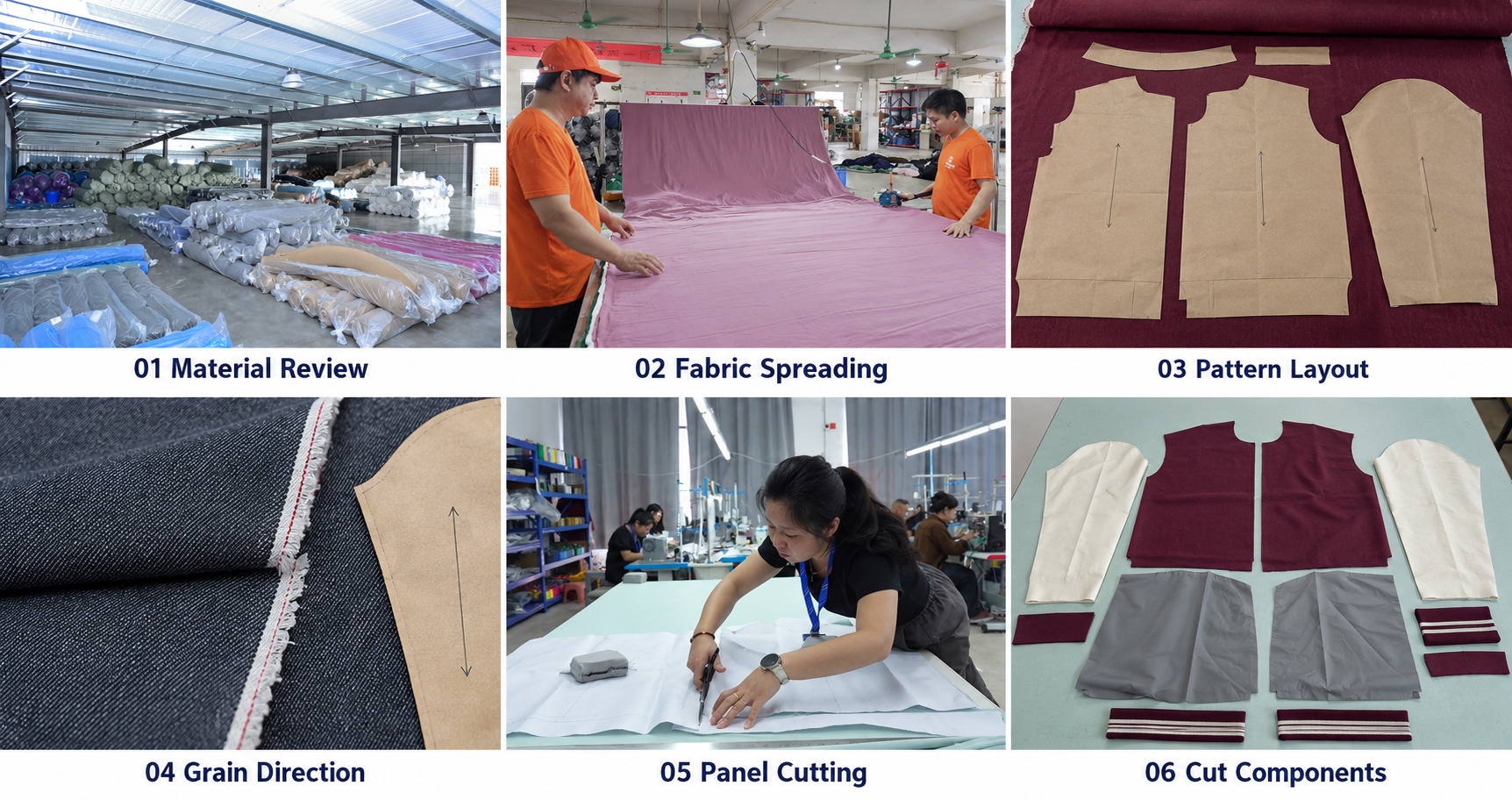
Preparation considers the fabric’s usable width, surface direction, stretch and visible condition. Where relaxation is needed, the handling method depends on the selected material rather than a fixed rule for every jacket.
Wool blends and fleece may have a directional surface that affects appearance. Satin can show differences in sheen when panels face different directions. Denim requires attention to grain and the agreed finish.
Sleeve materials are handled separately where necessary. PU and genuine leather have different backing, surface and cutting considerations. Genuine leather also requires allowance for irregular usable areas and visible natural variation.
Our material preparation page explains the checks that support this stage.
 Planning the Layout and Cutting Sequence
The cutting layout follows the confirmed patterns and order assortment. Material yield matters to cost, but panel orientation and matching requirements also need to be maintained.
Front panels, paired sleeves and other visible components should be planned with attention to shade and surface direction. Mixing visibly different material batches within one jacket can produce an uneven appearance.
Checks during cutting focus on panel shape, notches, pairing and alignment with the pattern. Cutting methods and layer arrangements depend on material thickness and handling requirements; they should not be assumed identical across wool, satin, denim and sleeve materials.
Keeping Sizes and Components Organized
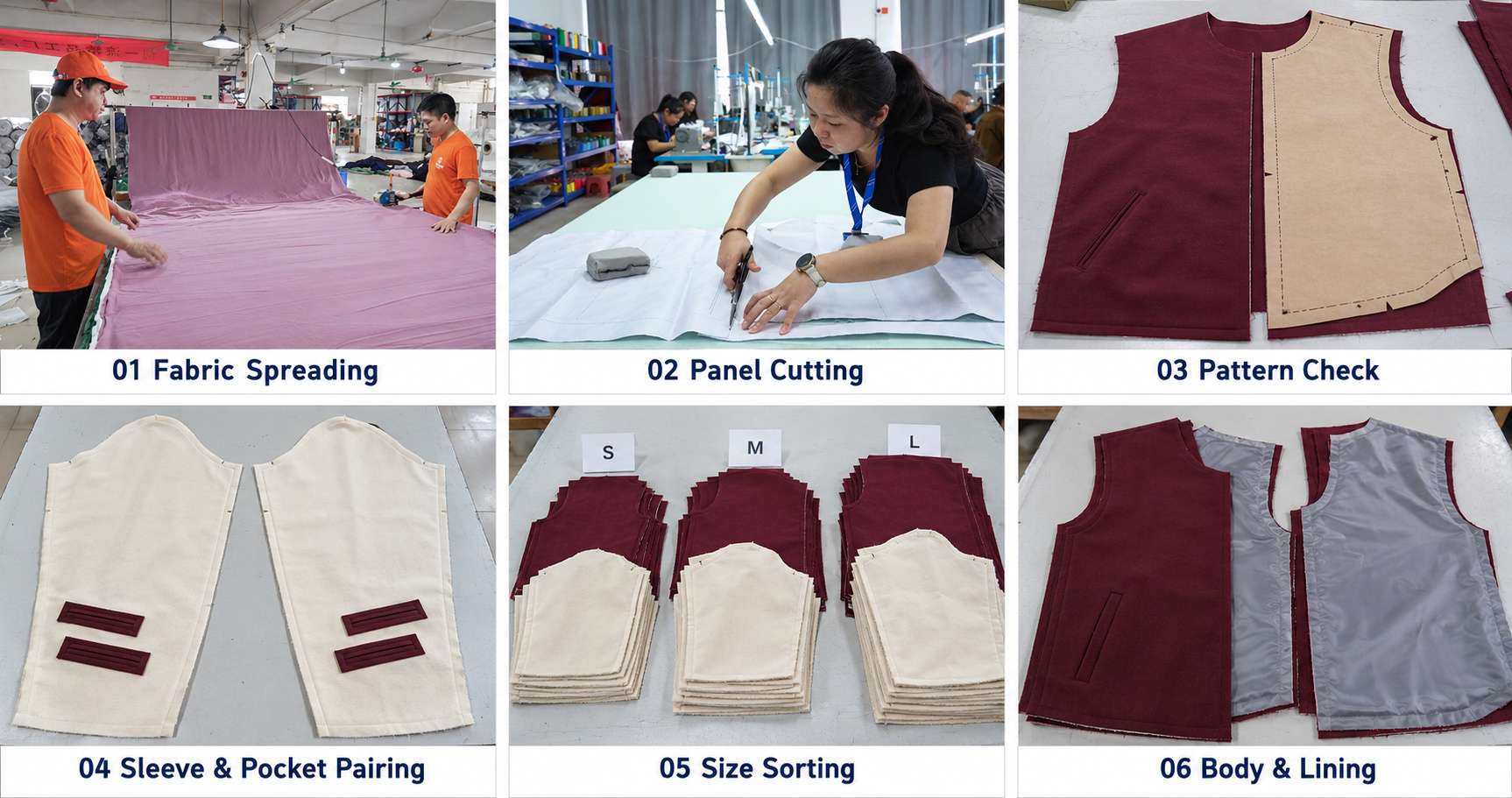
Cut panels are grouped so the sewing team can identify the correct style, size, color and component set. Body fabric and lining pieces need clear separation while remaining traceable to the corresponding jacket.
Panel identification becomes particularly important when an order includes several color combinations or a wide size range. Similar-looking pieces can differ in shoulder shape, sleeve length or seam position.
Decoration sequencing also affects organization. Where embroidery or patches are applied before assembly, the relevant panels need to reach that stage in the correct orientation and with the agreed placement reference.
 Checking Panels Before Sewing
Panel review looks for cutting damage, visible defects, incorrect shapes and missing components. A panel that does not match the working reference should be resolved before it enters assembly.
Pocket pieces, sleeve pairs and lining components also need to match the intended construction. These checks support sewing and jacket assembly, where cutting differences can otherwise become uneven seams or fit problems.
Information Needed to Plan Your Order
Send the confirmed design or tech pack, material specifications, size chart, quantity breakdown and decoration requirements. Mention any directional fabric, pattern-matching requirement or special sleeve material.
Material width, size distribution, panel complexity and usable yield can affect consumption and quotation. We review these details alongside the approved sample before confirming the cutting plan and bulk production schedule.