


Building the Jacket Around the Approved Sample
Sewing brings the cut body panels, sleeves, pockets, lining and rib components together into a finished varsity jacket. For clothing brands, private label buyers and wholesale importers, this stage determines whether the approved fit and construction carry through to bulk production.
We use the confirmed specification and sample reference to establish the assembly requirements. Material combinations, seam details, pocket construction and decoration placement need to be settled before sewing begins.
Cut components must match the correct style, size and color combination. Our fabric cutting page explains how panel preparation supports consistent assembly.
Joining Body Panels and Constructing Pockets
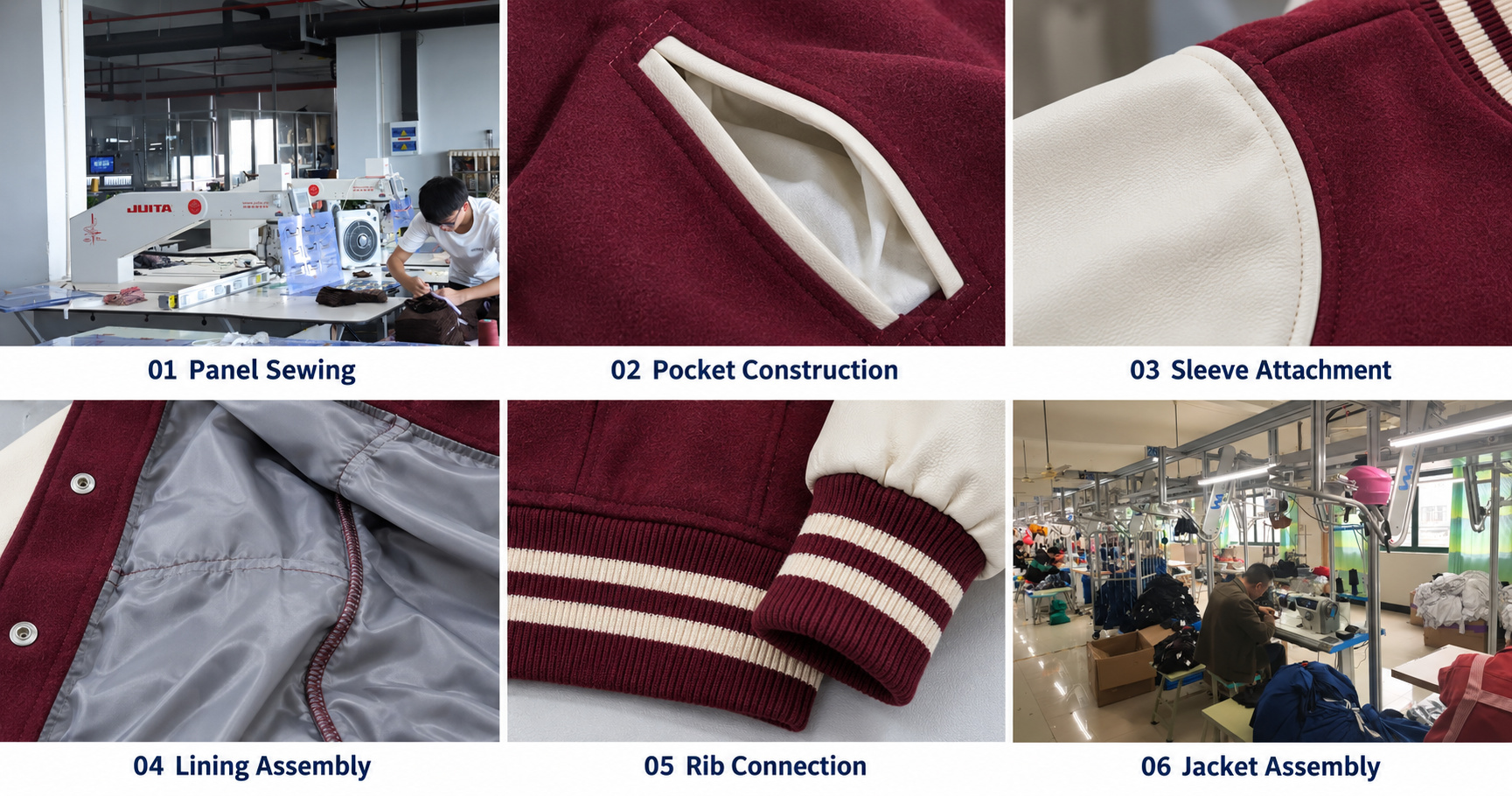
Body assembly requires attention to seam alignment, panel balance and the handling of different fabric thicknesses. Uneven feeding or unsuitable sewing settings can cause puckering, stretched edges or inconsistent seam appearance.
Pocket openings need to follow the confirmed position and shape. On welt-pocket designs, the opening, corners and pocket bags require careful construction so the pockets sit evenly and function properly.
The front closure area also needs sufficient stability for the selected snap buttons or zipper. Reinforcement requirements are reviewed during sampling, particularly where thick materials or several layers meet.
 Attaching Sleeves and Rib Components
Sleeve attachment affects shoulder shape, arm movement and the overall balance of the jacket. Paired sleeves must correspond to the correct garment size, with matching seam positions and material orientation.
Wool blend bodies combined with PU or genuine leather sleeves require different handling from lighter fabric combinations. Seam allowance, bulk and feeding need review at the junction between materials.
Rib collars, cuffs and hems are attached according to the confirmed proportions. Uneven stretching during sewing can distort the opening or create an unbalanced finish. The sample review should establish how the rib sits when the garment is relaxed.
Assembling the Lining and Decoration
Lining components need enough allowance for the jacket’s construction and movement without pulling the outer garment out of shape. Checks include sleeve lining alignment, interior seam finishing and the agreed label positions.
Decoration sequencing depends on the design. Embroidery or patches may be applied to separate panels before assembly when access is easier. Other applications require review on the assembled garment.
Placement references must account for seams, pockets and garment size. Our embroidery and patch application page covers these production considerations.
Checking Workmanship During Assembly
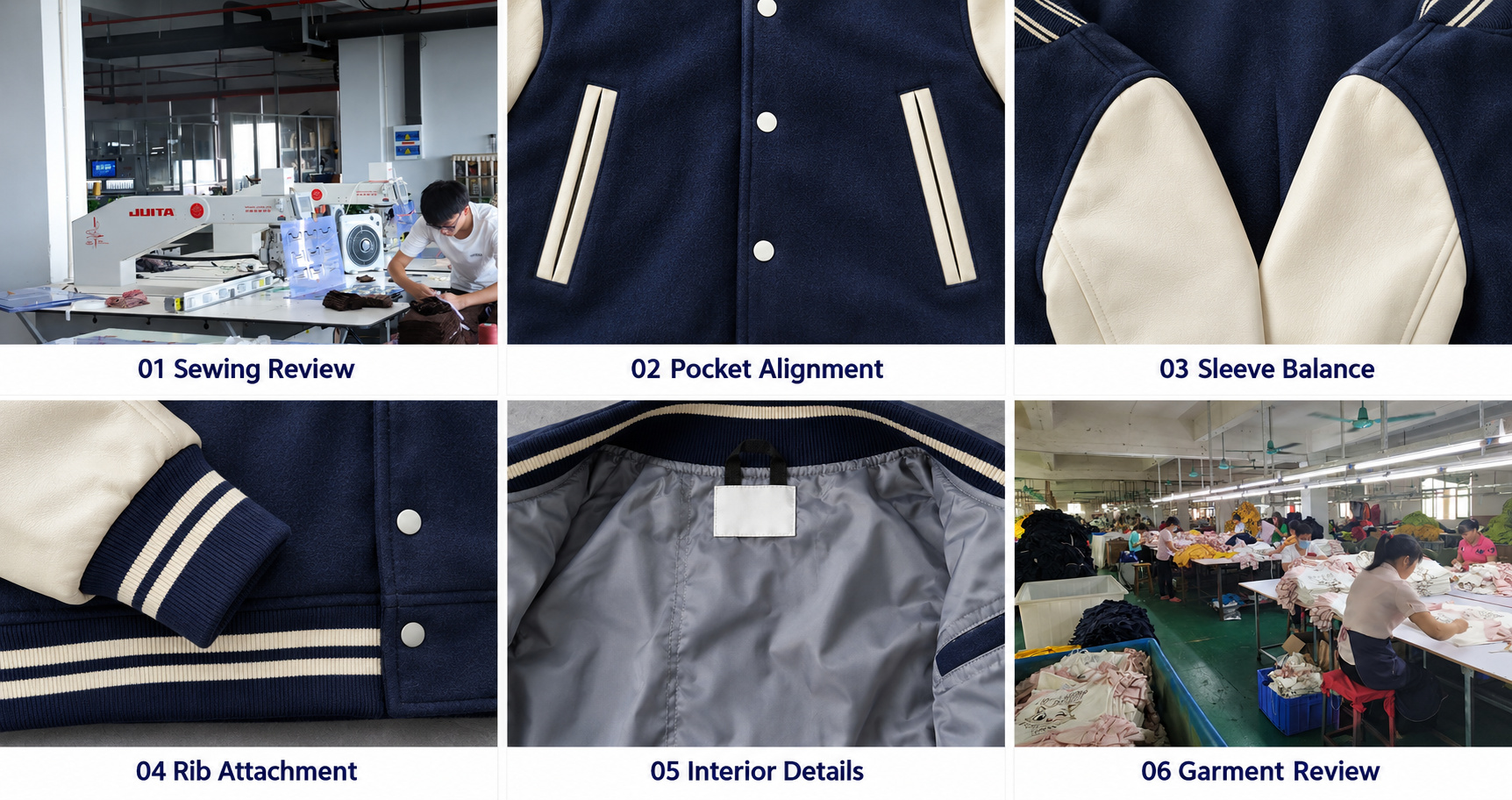
Checks during sewing focus on seam condition, pocket symmetry, sleeve pairing, rib alignment and lining attachment. Resolving an issue at the relevant operation helps avoid carrying it into the completed jacket.
Measurements are reviewed against the agreed chart and tolerances at suitable stages. A garment can match the chest measurement while still showing an uneven hem, twisted sleeve or pulling lining, so appearance and construction also require attention.
 Confirming Construction Before Bulk Sewing
Send your tech pack or reference garment, material preferences, measurement chart, pocket details, closure requirements and decoration layout. Clear photographs of the interior and seam details are useful when matching an existing design.
Construction changes should be resolved through sample development before bulk sewing. Complex pockets, contrasting materials, lining details and extensive decoration can affect labor cost and production timing.
After assembly, jackets move to finishing and final inspection before the confirmed folding, individual packing and export carton arrangements are completed.