


From Approved Specifications to Bulk Production
Varsity jacket production starts with a clear order specification. For clothing brands, private label buyers, wholesalers and teamwear suppliers, the main concern is whether the finished order will match the agreed fit, materials, decoration and packing requirements.
We review the jacket design, size breakdown, material combination, logo artwork and delivery requirements before confirming the production plan. Details that remain unresolved during development can affect material purchasing, sample revisions and the bulk schedule.
The approved sample and confirmed specification become the working references for production. Changes after approval need to be reviewed for their effect on cost and timing.
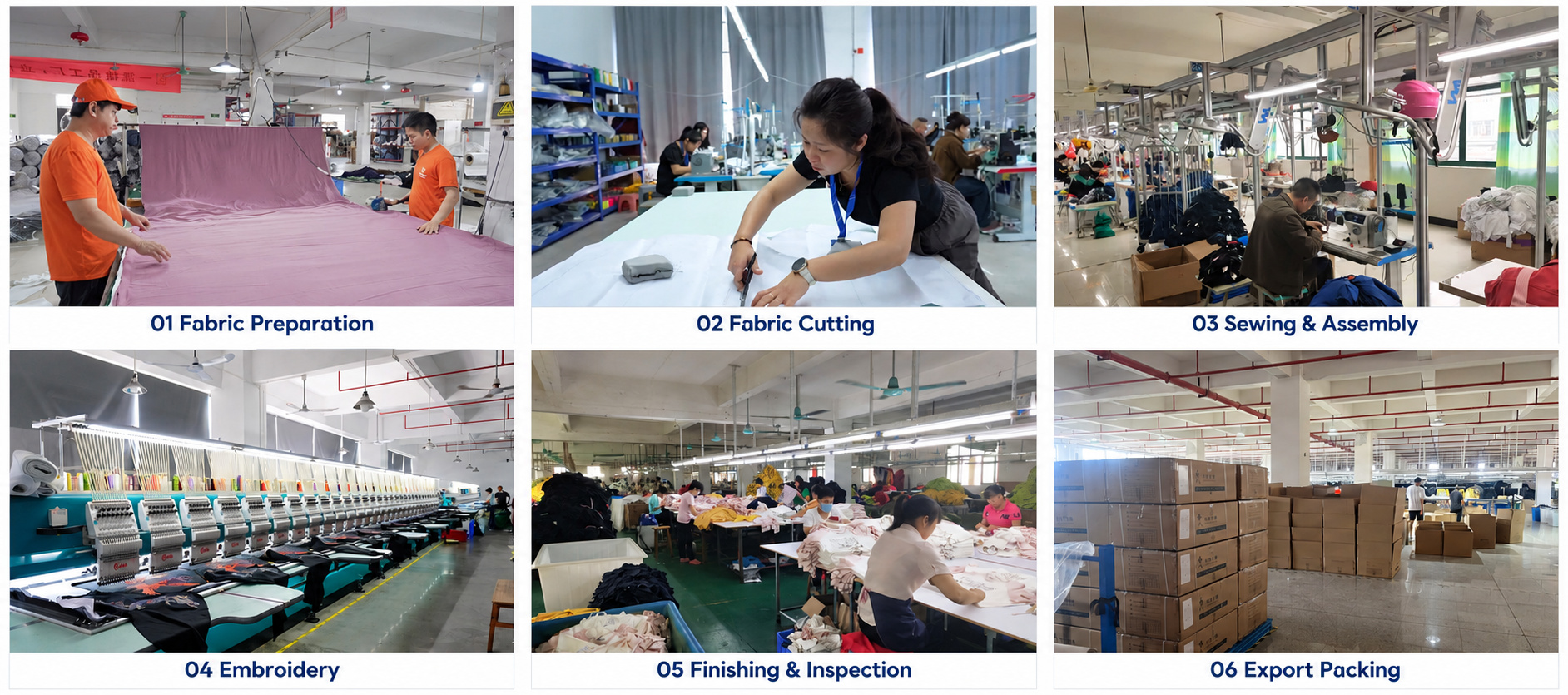 Material Preparation and Pattern Development
The body fabric, sleeve material, lining, rib knit and closures need to work together. A wool blend body with leather sleeves requires different handling from a satin or denim jacket. Material thickness, stretch and surface characteristics influence seam construction, fit and decoration placement.
Material preparation includes checking the selected colors, visible condition and compatibility of the components. Any proposed substitution should be confirmed before use.
Patterns translate the agreed design into garment panels. Size grading follows the confirmed measurement chart and fit direction. Our pattern making and size grading page explains the points buyers should settle before cutting.
Cutting and Sewing the Jacket
Cutting follows the confirmed patterns, size quantities and material requirements. Panel identification helps keep sizes and material combinations organized through sewing. Fabric direction, shade variation and the pairing of sleeve panels require attention before assembly.
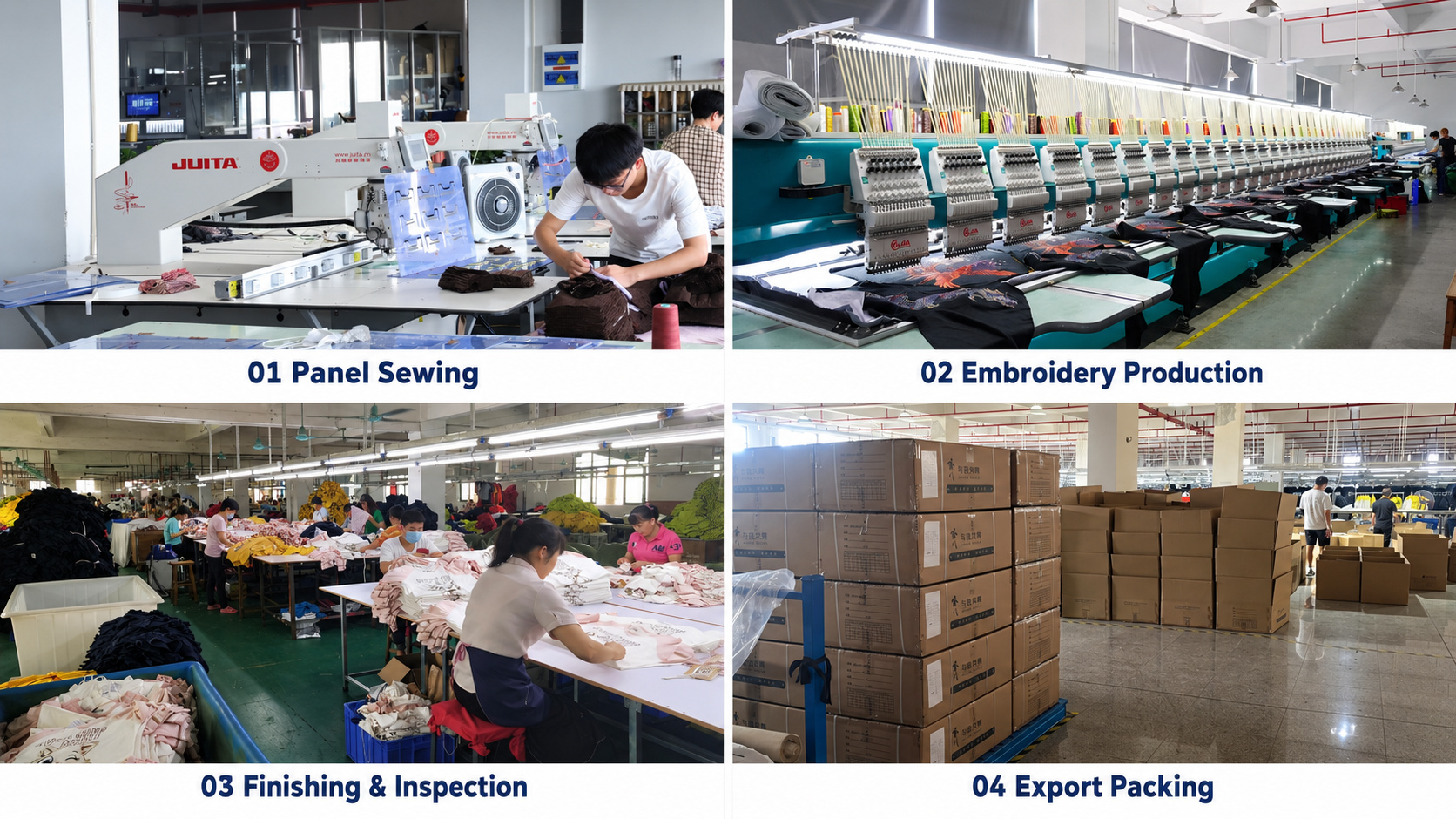
During sewing, operators join the body, sleeves, pockets, lining and rib components according to the jacket construction. Seam alignment, pocket symmetry and the attachment of cuffs and hems affect both appearance and wear.
The sequence can vary by design. Some decoration is applied to separate panels before assembly, while other details are added later. Buyers can review sewing and jacket assembly for construction considerations.
Decoration, Closures and Finishing
Embroidery and patches follow the confirmed artwork, thread colors, dimensions and placement references. Decoration needs to suit the selected fabric: dense embroidery, large patches or heavy appliqué can change how a panel hangs.
Snap buttons and other trims are installed with attention to position, alignment and operation. Finishing then includes removing loose threads, checking visible surfaces and pressing where appropriate for the material. Heat and pressure must suit the fabric, sleeve material and decoration.
 Inspection and Export Packing
Inspection compares the garments with the agreed specification and sample reference. Checks cover measurements, workmanship, material appearance, decoration placement, closures and labeling. Inspection scope, measurement tolerances and any third-party inspection arrangements should be agreed before shipment.
Our final inspection page covers these checks in more detail.
Packing follows the confirmed folding method, individual bag requirements and size assortment. Decoration surfaces need suitable protection, and garment quantities must match the packing list. Carton requirements are reviewed alongside the shipping arrangement.
Information Needed to Plan Your Order
Send your reference images or tech pack, material preferences, size chart, logo files, quantity by size and color, packaging requirements and target delivery date.
MOQ and lead time depend on material availability, decoration complexity and order structure. We confirm sampling requirements and the bulk production schedule after reviewing these details. For designs that still need development, start with sample development to resolve fit and construction before committing to production.