


Select Materials for the Complete Jacket
Jaktuno supports material selection for OEM varsity jackets supplied to apparel brands, wholesalers, private-label buyers and school or teamwear suppliers. Options include wool blends, cotton, polyester, fleece, satin, denim, PU leather and genuine leather.
We review body fabric, sleeve material, lining and rib together. A reference photograph can suggest the appearance, but it does not establish fiber composition, weight, thickness or backing. These details need confirmation before quotation and sampling.
Compare Body Fabric Options
Wool and wool-blend fabrics suit structured letterman-style constructions. Buyers should specify the required fiber content, fabric weight and surface appearance rather than use “wool” as a complete material description.
Cotton, polyester and fleece options provide different surface textures and garment structures. Fleece composition, weight and inner-side finish should be identified separately. Satin offers a smoother appearance, but the term does not identify its fiber content; polyester satin must not be described as silk.
For denim jackets, we review weight, color and wash appearance against the intended fit and construction. If a particular finish is required, it should be represented by a material reference or sample.
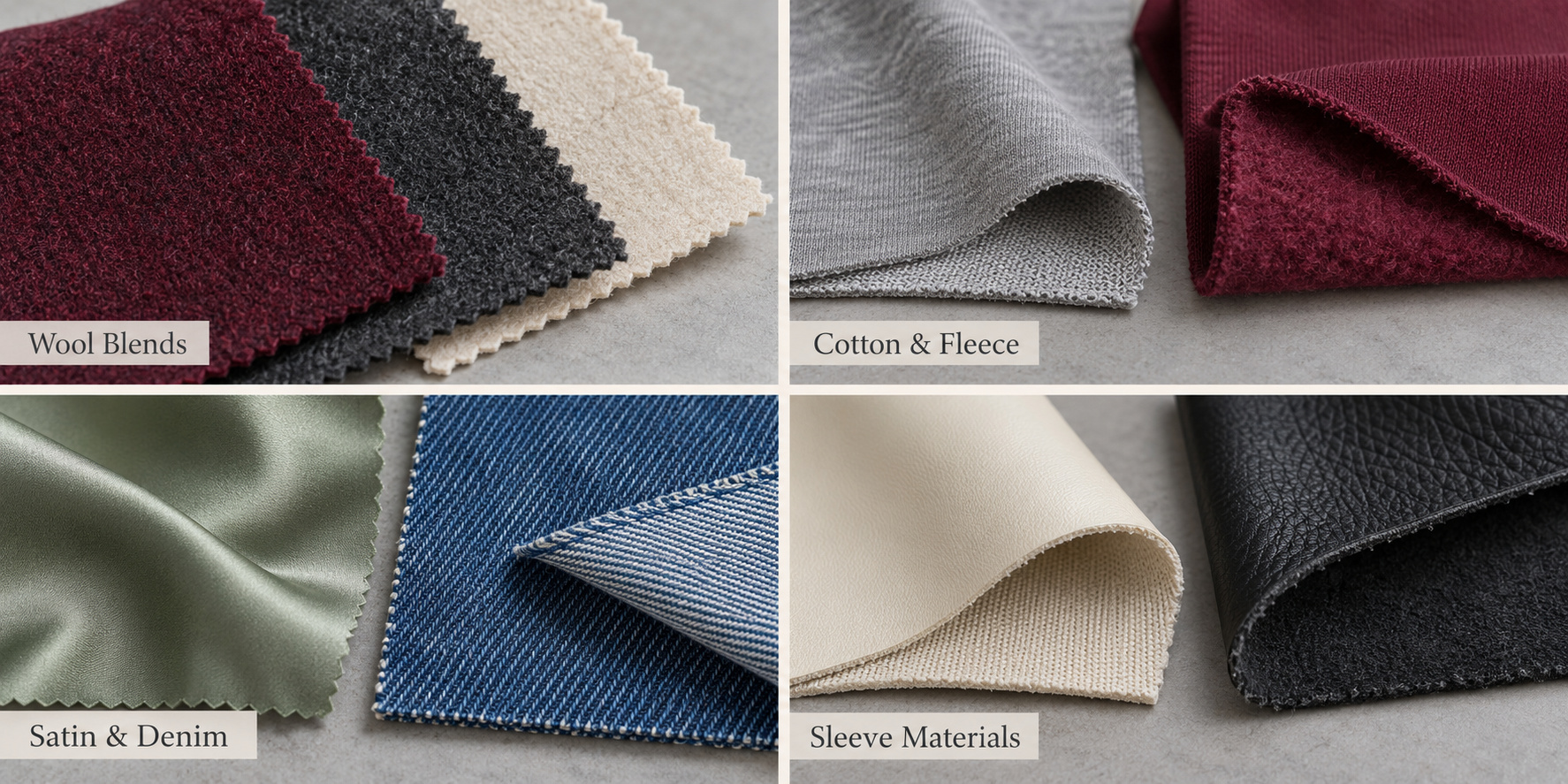 Specify Sleeve Materials Separately
Contrast sleeves can use a different material from the body. PU and genuine leather are separate sourcing and quotation options, with thickness, surface finish, backing and color reviewed during development.
The sleeve material affects handling, seams, decoration and the way the jacket folds. We examine the proposed combination during sampling rather than assume that materials with a similar appearance behave identically. Reference swatches are particularly useful when the buyer needs a specific grain or surface finish.
Coordinate Lining, Rib and Decoration
Lining and rib influence the finished jacket’s feel, proportions and appearance. We confirm lining construction, rib colors, stripe arrangement and how these components connect to the body, sleeves and openings.
Embroidery and patches also need consideration at material-selection stage. Lightweight fabrics, dense stitching and large patches may require adjustments to achieve the intended appearance. Our logo embroidery and patch customization review checks decoration against the selected fabric and garment structure.
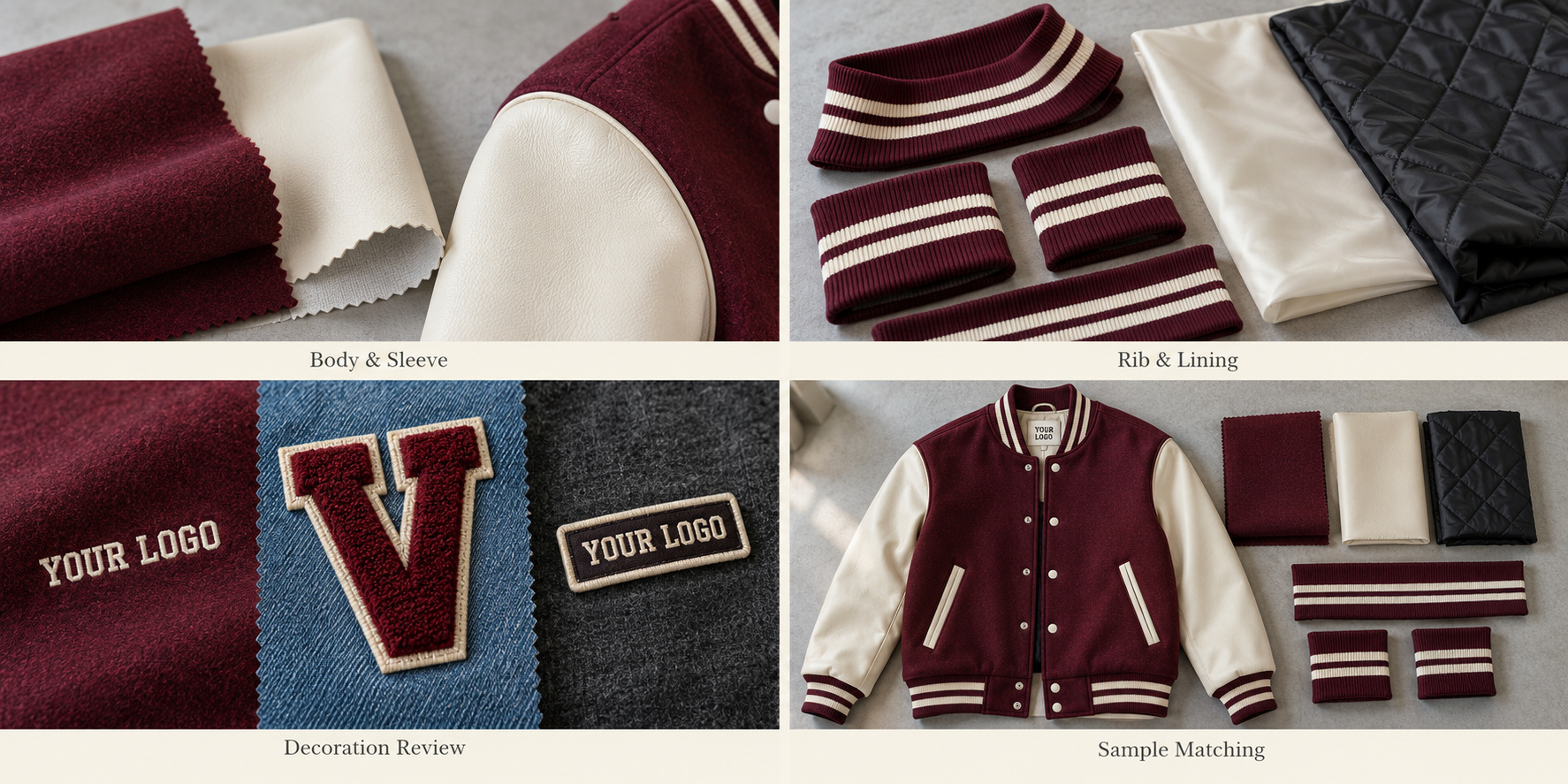 Approve Materials Before Bulk Sourcing
Material references should identify the agreed type, color and relevant specifications. During sample development, buyers review the combination in garment form, including appearance, fit and decoration.
Once approved, material details become part of the order reference. Incoming checks compare supplied fabrics and trims with those requirements before use. Buyer-requested colorfastness or third-party material testing can be coordinated when specified; testing scope should be agreed separately.
Understand Sourcing, MOQ and Packing Effects
Special colors, leather requirements and less readily available fabrics can affect material minimums, sample timing and bulk scheduling. Standard jacket styles generally start around 100–300 pieces per style, while more customized orders are usually around 300–1,000 pieces per style/color, subject to review.
Send body and sleeve preferences, reference swatches, quantity by color, lining and rib requirements, decoration and target delivery date. Include packing requirements so folding and protection can be considered for the selected materials. The material preparation stage follows the confirmed order specifications.