


Checking Bulk Jackets Against the Agreed Reference
Final inspection checks completed varsity jackets against the confirmed sample, specification sheet and order requirements before shipment. For apparel brands, private label buyers and wholesale importers, the objective is to identify differences that affect fit, appearance, branding or order accuracy.
We use the agreed production reference to review the finished garment. Measurement tolerances, defect criteria and inspection coverage should be settled before bulk production. A visual garment check does not establish material composition, chemical compliance or laboratory-tested performance; those requirements need a separately agreed testing scope.
Reviewing Appearance and Jacket Construction
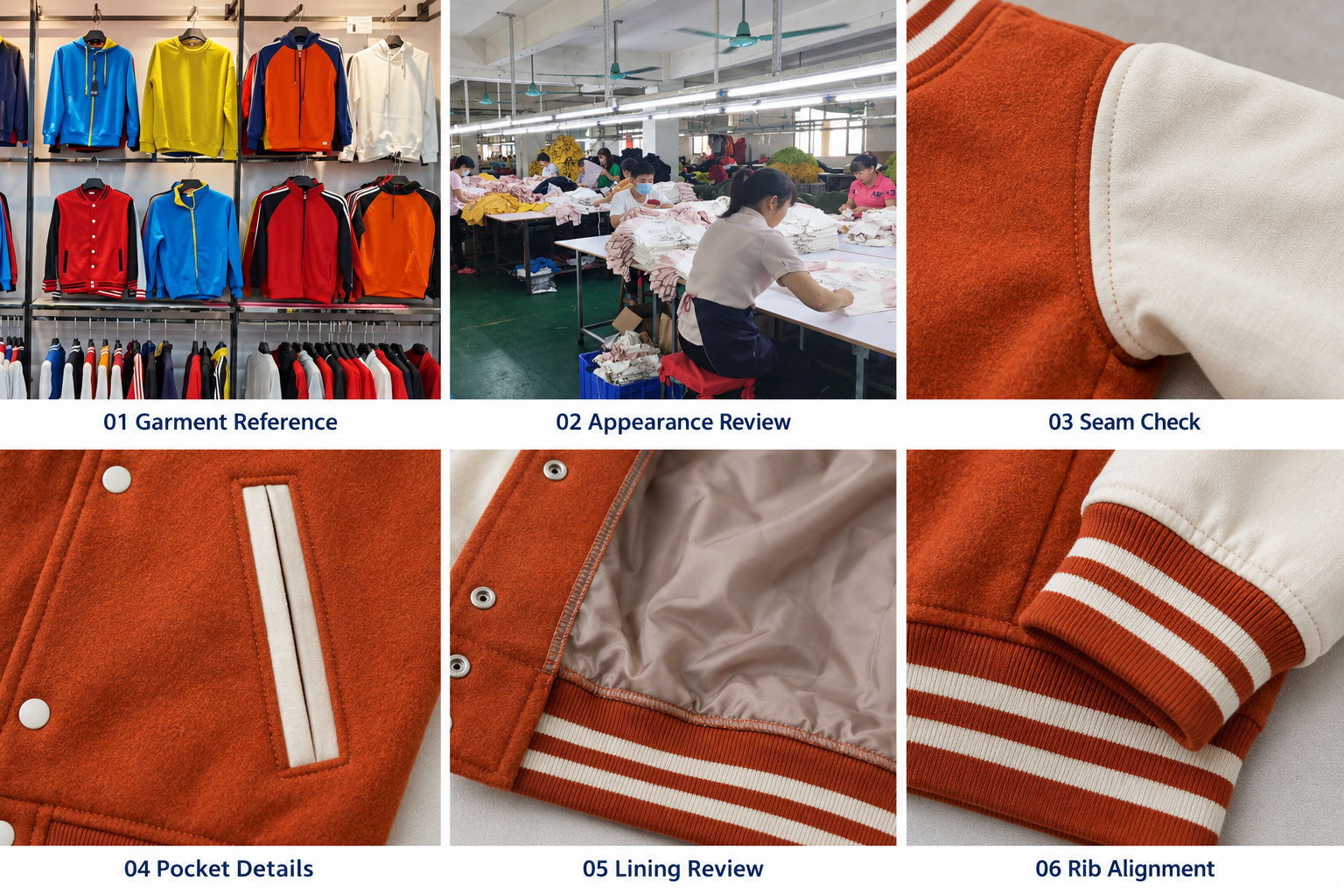
The appearance review covers the body, sleeves, front opening, pockets, rib trims and lining. Inspectors look for visible stains, fabric damage, uneven seams, loose threads, puckering and differences between paired components.
Contrast sleeves and striped rib require particular attention because alignment differences are easy to notice. The lining should sit correctly inside the shell without pulling the hem or restricting the intended fit.
Jackets are reviewed after finishing and ironing, when pressing marks, distorted rib or flattened decoration can be identified. Garments needing correction are separated for rework and checked again.
 Measuring Sizes and Reviewing Fit Consistency
Measurements follow the agreed points of measure and garment preparation method. Common checks include chest width, body length, sleeve length, shoulder width and relevant rib dimensions.
Jackets should be laid flat without stretching the fabric. Measurement results are compared with the size specification and its stated tolerances. The selected sizes and inspection quantity depend on the order assortment and agreed inspection plan.
Fit concerns should be resolved during sample development. Final inspection verifies bulk consistency; it is too late to introduce a different fit without affecting completed garments and delivery.
Checking Decoration, Closures and Labels
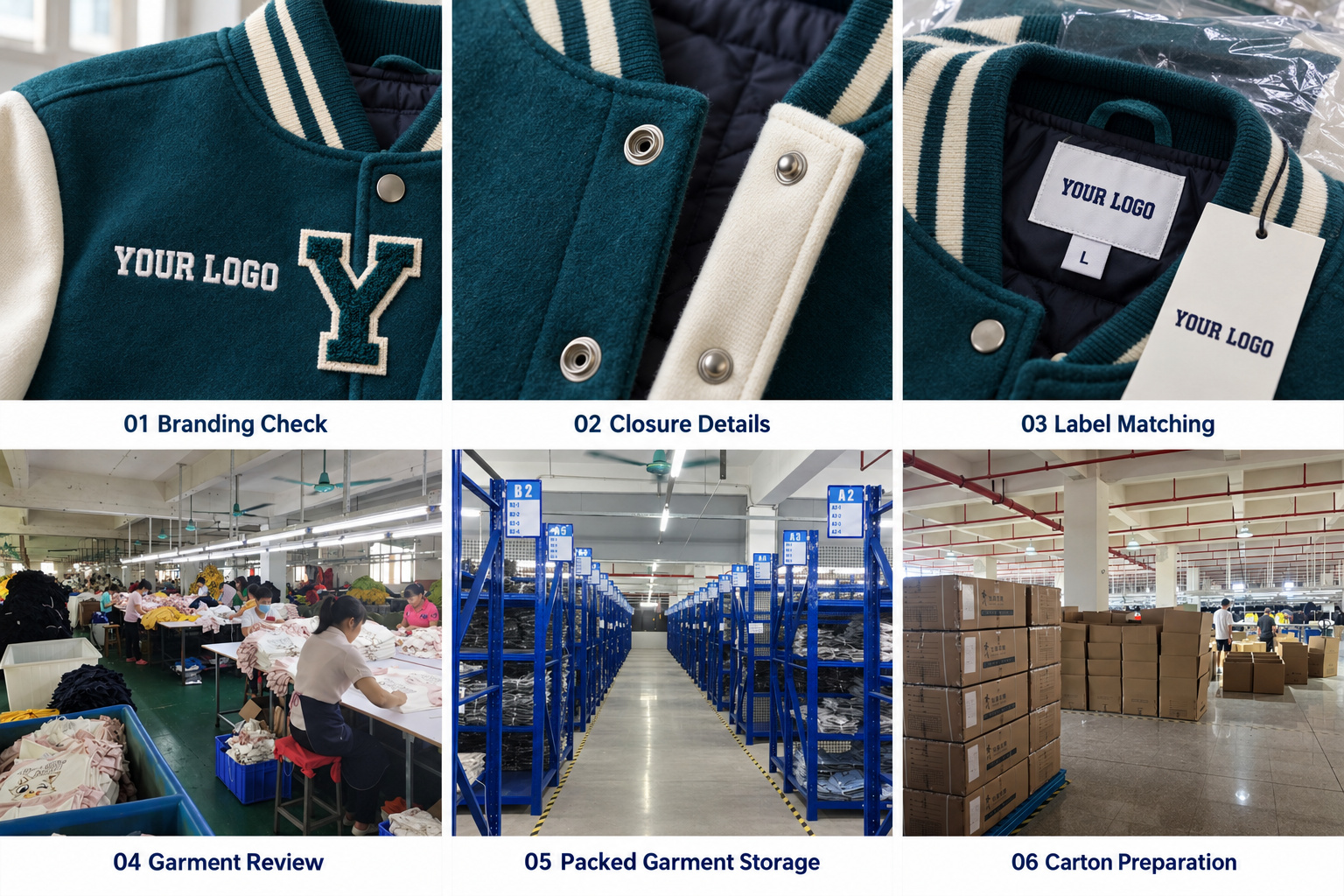
Embroidery and patches are compared with the confirmed artwork and placement reference. Checks cover spelling, thread color, patch orientation, edge stitching and visible damage. Raised chenille decoration should retain its intended texture.
Snap buttons and zippers are checked for alignment, attachment and normal opening and closing. This operational review is separate from any specified pull-strength or durability test.
Private label details are checked against the order: main labels, size labels, care-label content and hangtags must match the intended style and size. Unconfirmed care instructions or composition claims should not be added during packing.
Verifying Packing and Order Assortment
Packing checks cover garment cleanliness, folding, decoration protection, individual bags and the agreed size or color assortment. Bag labels and carton information are compared with the buyer’s packing instructions.
Quantity reconciliation and carton assortment checks are separate from inspecting a sample of garments. Both need clear responsibilities and records. The packing method should follow the confirmed custom packaging requirements.
 Agreeing Inspection Scope Before Shipment
If your order requires third-party inspection, provide the inspection checklist, sampling requirements and booking arrangements in advance so access and timing can be coordinated. Any requested AQL level or acceptance criteria must be confirmed rather than assumed.
For a quotation, send the style specifications, quantities by size and color, branding details, packing instructions and required delivery date. Inspection coverage, additional testing and rework can affect the shipment schedule. Release arrangements are confirmed before packing and export preparation.