


Preparing Jackets for Final Presentation
Finishing brings together the appearance of the assembled varsity jacket before final inspection and packing. For clothing brands, private label buyers and wholesale importers, this stage affects how garments look when unpacked: the front should sit evenly, sleeves should retain their shape, and rib trims should lie naturally.
Our OEM finishing work follows the agreed sample and material combination. A wool-blend body with leather sleeves requires different handling from satin, cotton or denim. Pressing methods are reviewed against the actual garment rather than applying one setting across every style.
Removing Loose Threads and Reviewing Surfaces
Before pressing, jackets are checked for loose thread ends, visible sewing marks and surface contamination. Attention goes to pocket openings, underarm seams, lining joins and areas around embroidery or attached patches.
Threads are trimmed without cutting structural stitches. Surface cleaning must suit the fabric and decoration; aggressive brushing or unconfirmed cleaning agents can affect color, pile or coating. Jackets with sewing defects are returned for correction rather than using pressing to conceal them.
Details established during sewing and jacket assembly remain the reference for seam shape and construction.
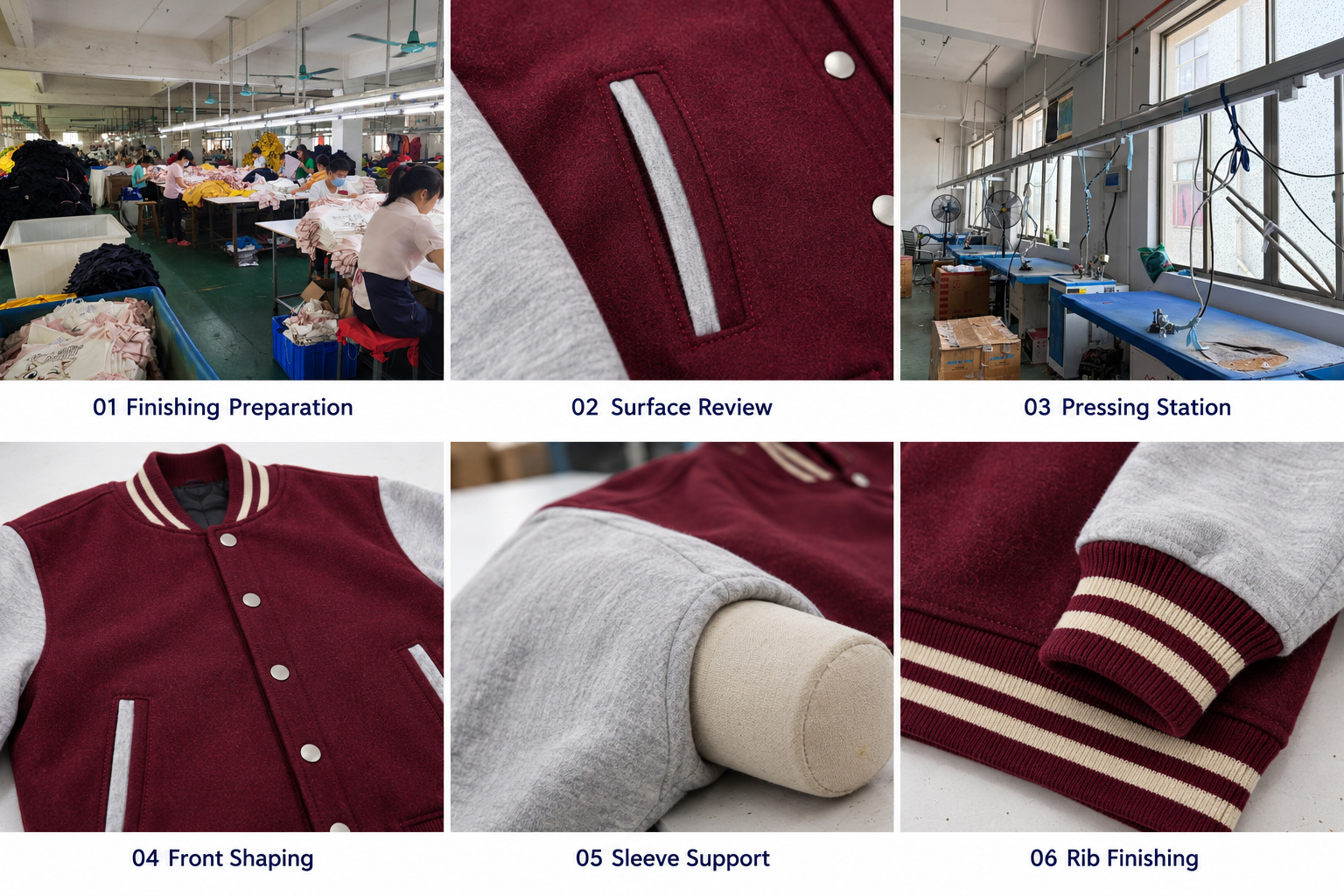 Adjusting Pressing to the Material
Heat, moisture, pressure and contact time can change the surface of a jacket. Wool blends may develop shine under excessive pressure, while satin can show contact marks. PU coatings and genuine leather sleeves require separate handling and should not automatically receive the same treatment as the body fabric.
We review the material combination and sample response before bulk finishing. Where appropriate, protective cloths or controlled steaming help reduce direct contact marks. Material care instructions and supplier guidance should inform the method.
The selected fabric and material options therefore influence both finishing time and handling requirements.
Shaping the Front, Sleeves and Rib Trims
Finishing focuses on the jacket’s intended silhouette. The front opening, pocket edges and sleeve seams are arranged without stretching the garment. Collar, cuffs and waistband are handled carefully so the rib retains its recovery and stripe alignment.
Heavy jackets need support during handling to avoid pulling on shoulder seams. Lining should sit smoothly inside the shell without being forced into position. Pressing does not replace correct pattern dimensions or repair a mismatch between the shell and lining.
After cooling, the jacket is reviewed flat or hanging, as appropriate, to check that its shape remains consistent.
Protecting Embroidery, Patches and Hardware
Raised embroidery, chenille patches and appliqué need protection from crushing or direct heat. Finishing around these areas should preserve texture, patch edges and surrounding fabric.
Snap buttons, zipper components and other hardware also affect how the garment is positioned. Direct pressure over hardware can leave impressions on adjacent material. For decorated styles, the approved sample provides the appearance reference.
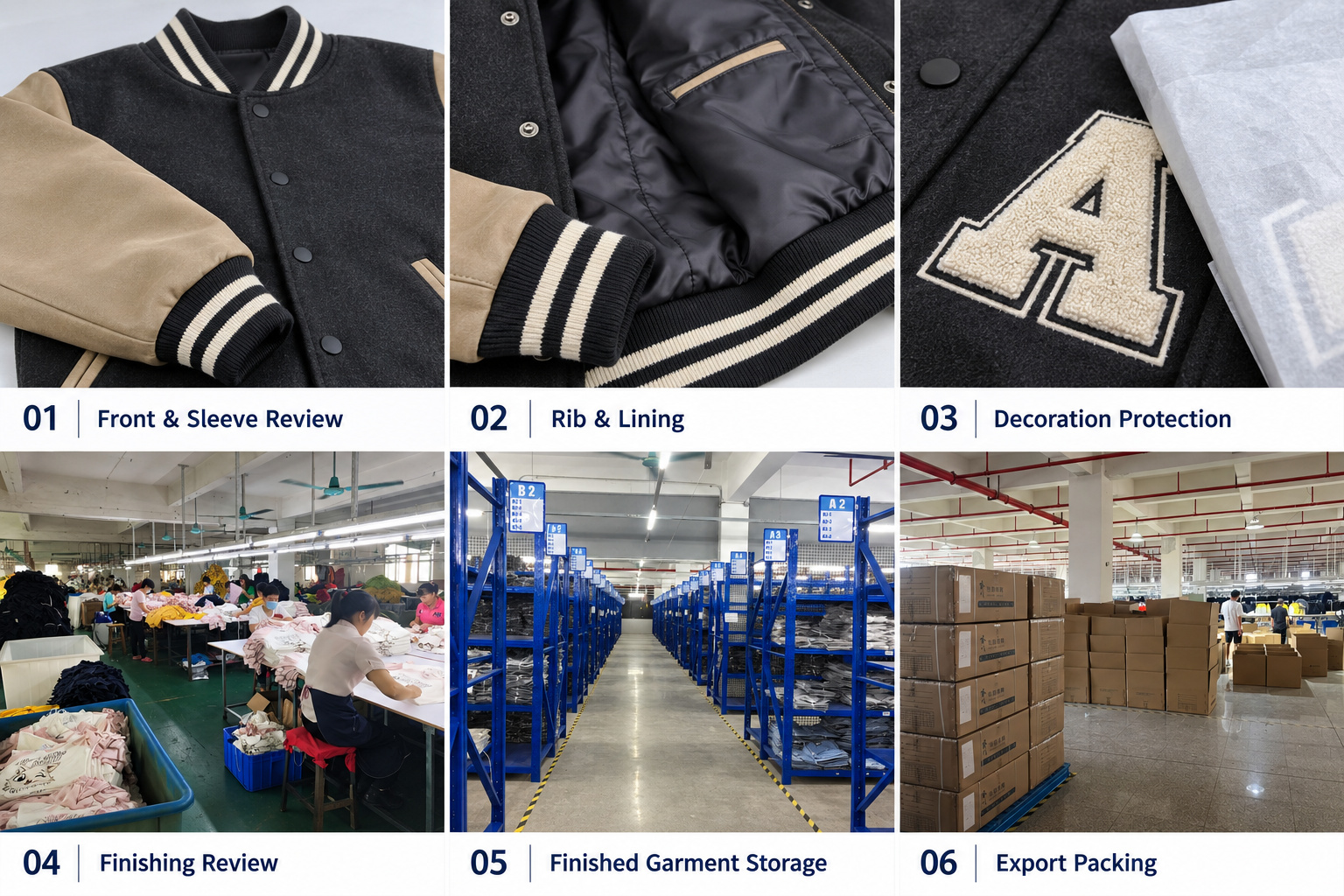 Checking Finished Jackets Before Packing
Finished jackets move to final inspection for the agreed appearance, measurement and construction checks. Garments should cool and dry adequately before folding to reduce trapped moisture and renewed creasing.
Please provide material details, decoration placement, the sample reference and packing requirements when requesting a quotation. These determine finishing complexity and handling time. Individual bags, folding methods and carton arrangements are confirmed through packing and export preparation before shipment.