


Applying Branding to the Confirmed Jacket Design
Embroidery and patches give varsity jackets their brand, team or collection identity. For clothing brands, private label buyers and teamwear suppliers, production needs to reproduce the agreed artwork while maintaining the jacket’s shape and construction.
We review the decoration method, artwork size, colors and placement alongside the selected materials. Direct embroidery, chenille patches, embroidered patches and appliqué require different preparation and attachment decisions.
The approved decoration sample and placement reference guide bulk application. A digital mockup helps communicate the design, but it does not show the finished thread texture, patch thickness or effect on the fabric.
Preparing Artwork and Decoration Samples
Artwork should clearly identify the lettering, outlines, color separations and finished dimensions. Small text, narrow gaps and fine details may need adjustment to remain readable in embroidery.
Direct embroidery requires digitizing suitable for the artwork and fabric. Stitch direction, density and backing affect coverage, surface flatness and the reverse side. Patch development also needs confirmation of the edge finish, base material and intended attachment method.
Our logo embroidery and patch customization page covers the options buyers can compare before production.
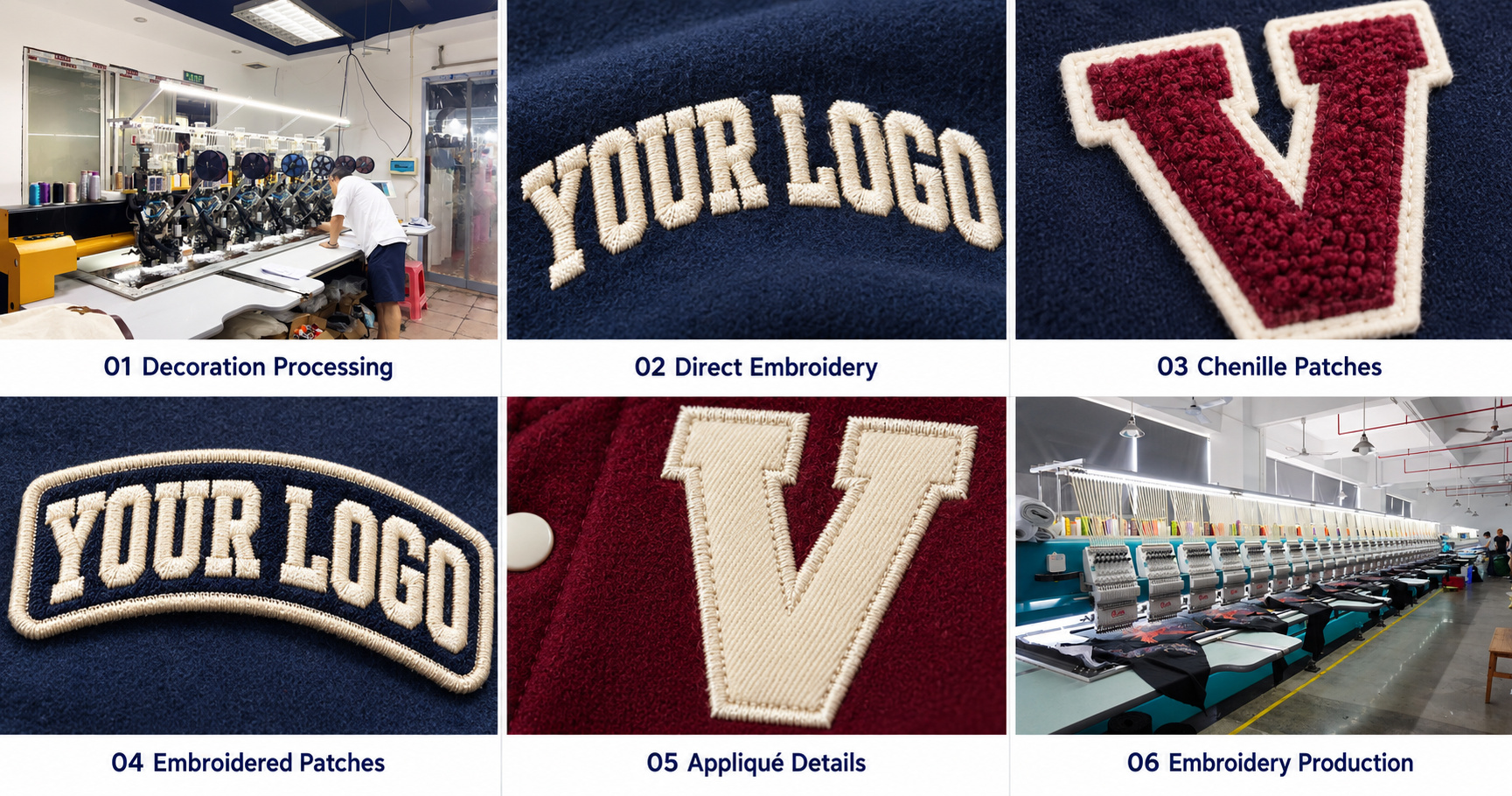 Checking Decoration Against the Fabric
The same artwork can produce different results on wool blends, satin, denim or sleeve materials. Dense stitching may pull a lightweight panel, while raised or textured surfaces can affect the clarity of small details.
Backing and support need to suit the material and decoration. For PU or genuine leather components, needle penetration and attachment methods require sample review because punctures can remain visible after repositioning.
Large or heavy patches can also affect how a panel hangs. Reviewing the decoration on the intended material through sample development helps resolve these issues before bulk application.
Confirming Placement and Production Sequence
Placement references should identify the decoration’s position relative to stable points such as the center front, shoulder seam or pocket opening. Confirm whether the position follows a consistent distance or needs adjustment across sizes.
Decoration may be applied to separate panels before sewing when access and backing placement are easier. Other designs require application after partial or complete assembly. The sequence must account for lining access, pockets and nearby seams.
Chest, sleeve and back designs should be reviewed together so that artwork does not interfere with construction. These decisions connect directly with sewing and jacket assembly.
Attaching Patches and Reviewing Workmanship
Patch attachment follows the confirmed method and sample reference. Sewn attachment requires attention to edge coverage, stitch continuity and the handling of corners or curved outlines. Adhesive backing, where selected, should be reviewed for its intended role rather than assumed to provide sufficient permanent attachment.
Production checks cover artwork readability, thread colors, placement, patch orientation, loose threads and visible puckering. Attachment edges and the reverse side also need review where accessible.
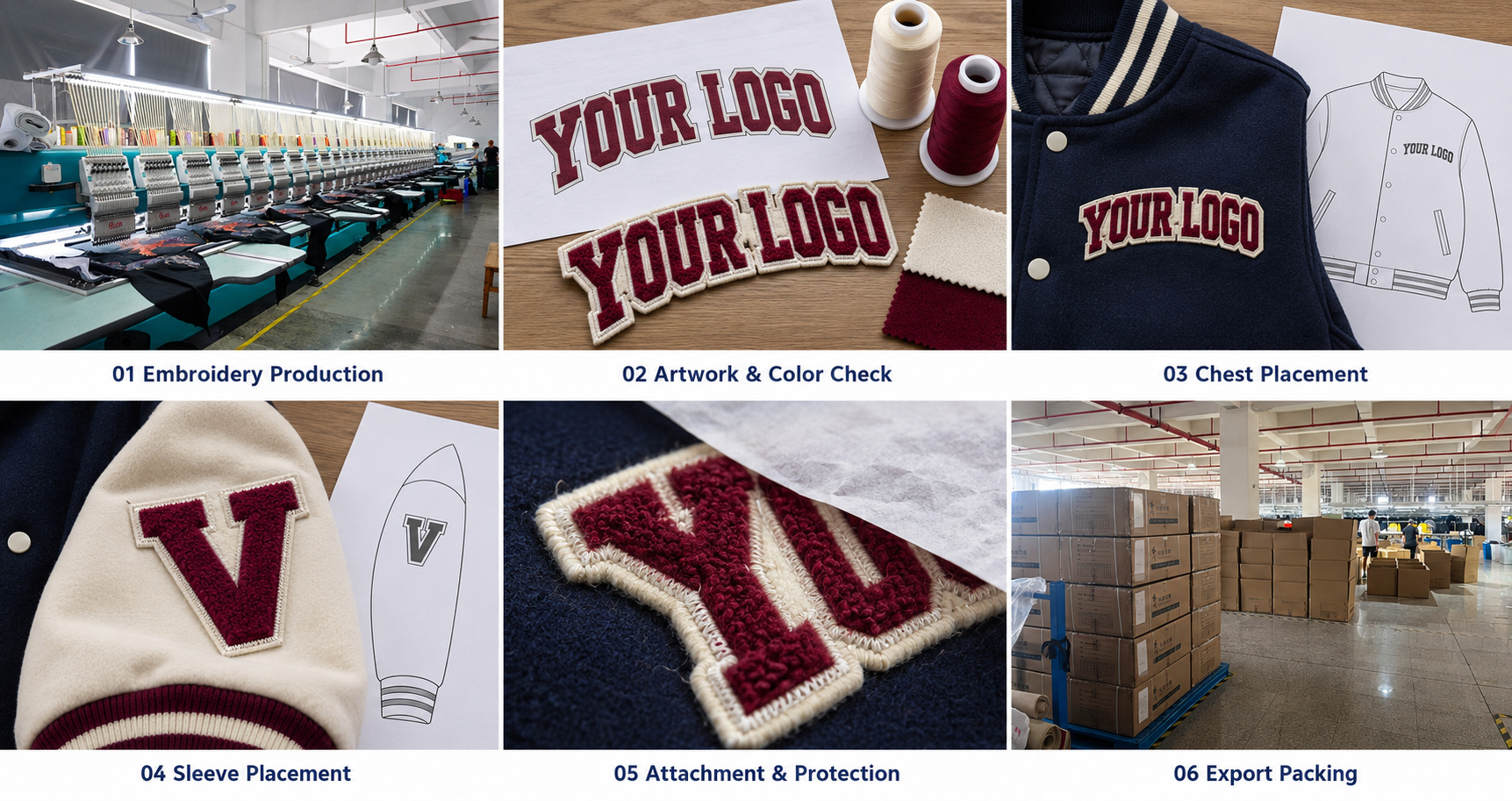 Details Needed for a Decoration Quotation
Send the artwork files, finished dimensions, decoration method, placement references and quantity by design and color. Include the jacket material specification and any existing patch or embroidery sample.
Artwork complexity, stitch coverage, patch size, application locations and the number of designs affect development cost, MOQ and production timing. Revisions should be confirmed before bulk decoration begins.
Completed decoration is reviewed during final inspection. Folding and packing should avoid unnecessary pressure on raised chenille, thick patches or large decorated surfaces.