


Preparing Materials Around Your Jacket Specification
Material preparation connects the approved varsity jacket design with the components needed for bulk production. For brands, private label buyers and wholesale importers, this stage helps resolve differences in appearance, thickness and handling before materials reach the cutting table.
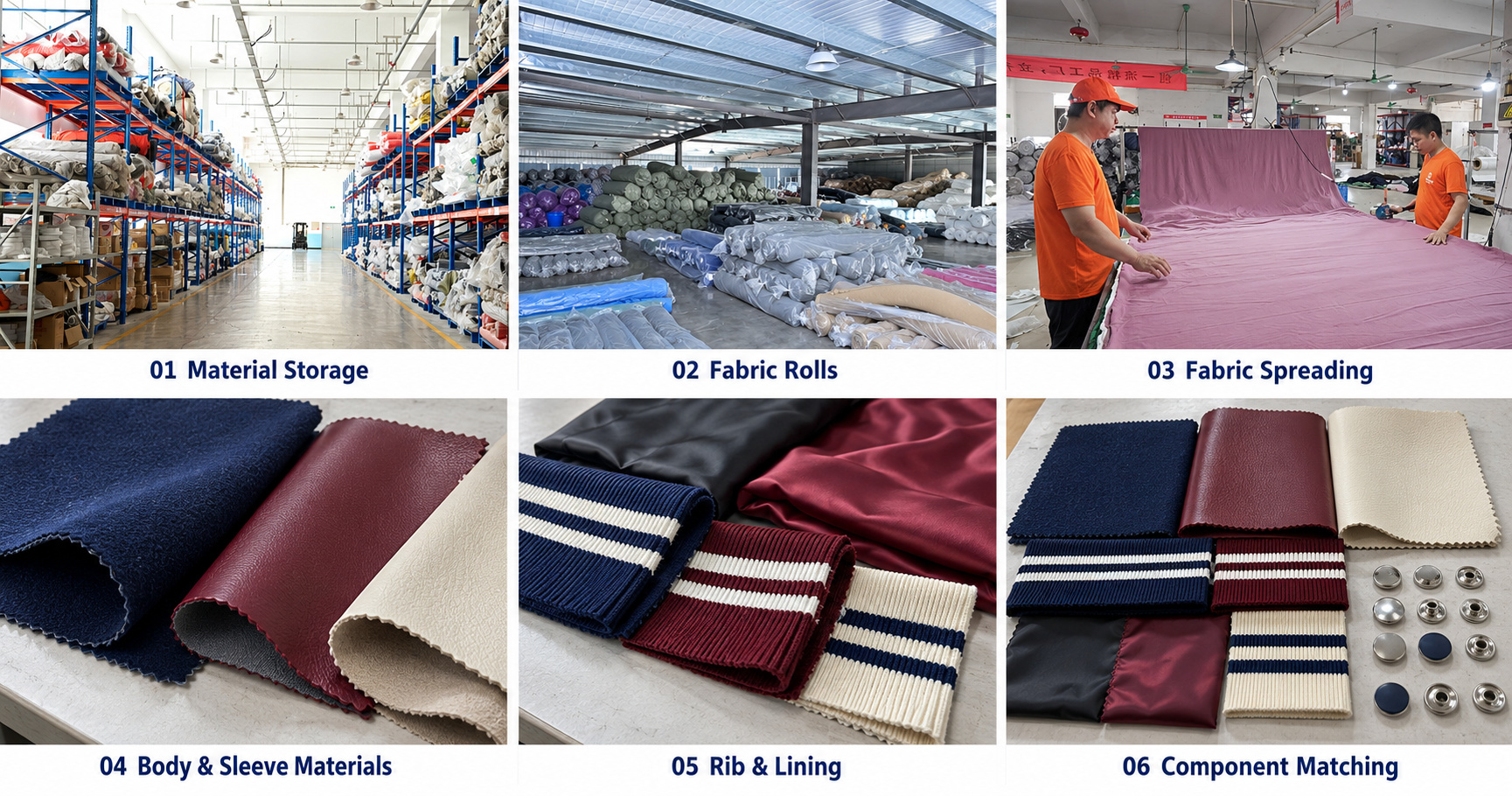
We review the body fabric, sleeve material, lining, rib knit and trims against the confirmed specification. The material list needs to identify which components belong to each style and color combination, including any differences between the development sample and the intended bulk materials.
A reference jacket can help explain the desired result, but photographs alone cannot confirm fabric composition, weight or hand feel. Physical swatches and sample review provide a clearer basis for purchasing decisions.
Body Fabric and Sleeve Material Review
Wool blends, cotton, fleece, satin and denim create different jacket structures. Preparation considers the selected fabric’s surface, thickness, stretch and direction, together with how it will behave during cutting and sewing. Satin describes a fabric construction; its fiber composition should be specified separately.
Sleeve materials also need clear identification. PU and genuine leather are separate options with different surfaces, backing characteristics and handling requirements. They should not be treated as interchangeable in the quotation or material list.
Our fabric and material options page outlines the combinations buyers can discuss during development. Material availability and purchasing minimums need confirmation for the selected order.
 Matching Rib, Lining and Trims
Collar, cuff and hem rib must suit the jacket’s construction and agreed fit. Rib thickness, stretch recovery and stripe arrangement affect the finished appearance, particularly where contrasting colors meet the body and sleeves.
Lining selection influences the interior finish and how easily the jacket can be assembled. Snap buttons, zippers, pocket components and labels are reviewed alongside the fabrics so that component changes do not create unexpected construction problems.
Color matching should use the agreed physical references. Different materials can reflect light differently, so the body, sleeves and rib may show visible differences even when intended to share a color. The color and size customization page explains how these combinations are confirmed.
Checking and Organizing Incoming Materials
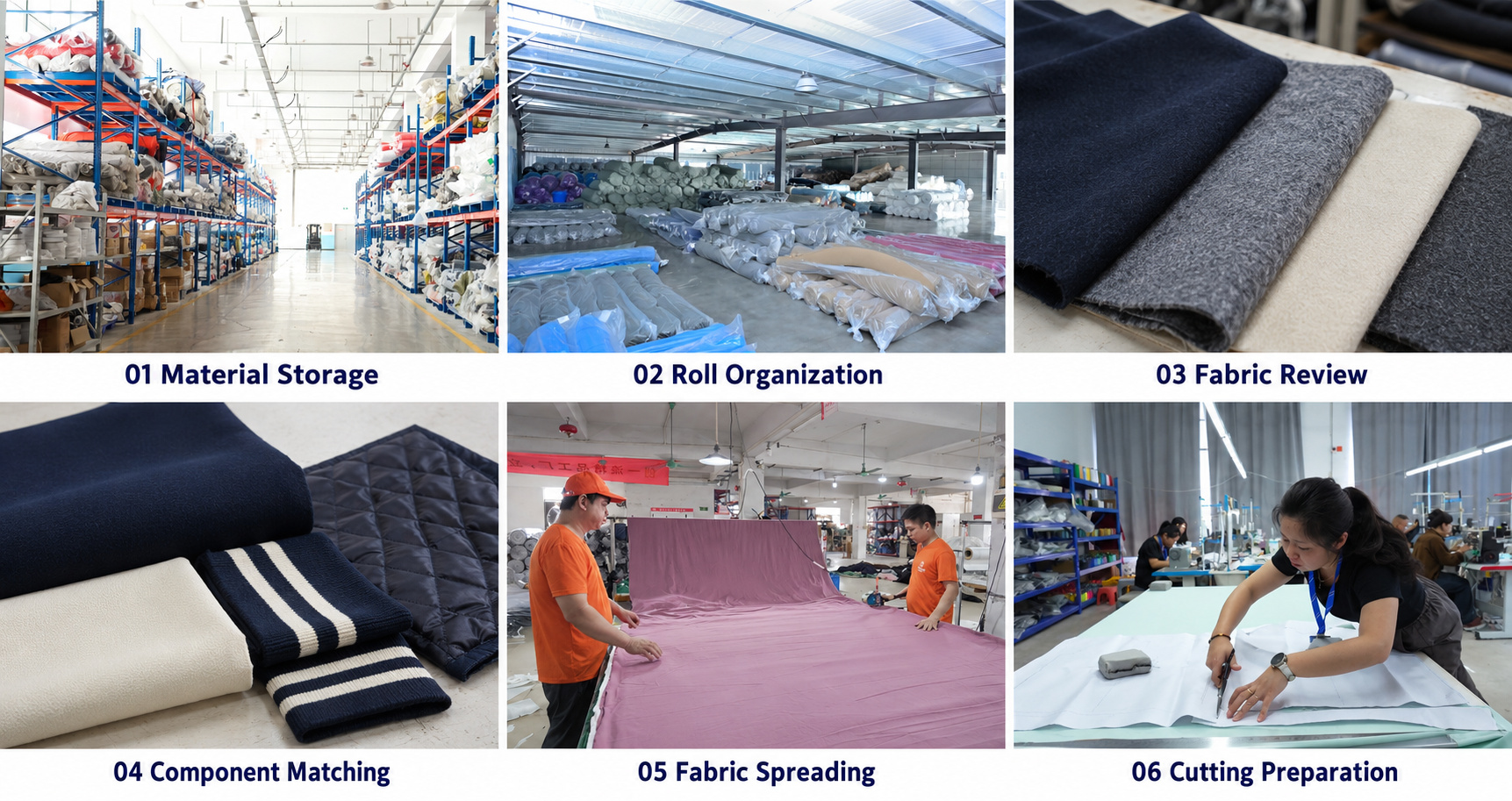
Before cutting, checks focus on visible defects, shade variation, usable width where relevant, and consistency with the selected material reference. Rolls and components need to remain identifiable by style, color and material batch.
Where shade differences are found, material grouping requires attention to reduce mismatched panels within the same garment. Quantity review also considers the size assortment, cutting allowance and material-specific wastage.
These checks do not replace laboratory testing. If a buyer requires composition verification, colorfastness testing or other destination-specific checks, the scope and arrangements should be discussed before material purchasing.
 Releasing Materials for Sampling and Cutting
Materials used for development should be identified clearly, especially when a temporary sample fabric differs from the proposed bulk fabric. A change in thickness, stretch or sleeve material can require another construction or fit review through sample development.
After material references and order details are confirmed, preparation supports the planned fabric cutting sequence.
For a quotation, send the jacket reference, preferred material specifications, color combinations, quantity by size and color, and target delivery date. Stock availability, custom dyeing, special rib and trim purchasing can affect MOQ, cost and the production schedule.