


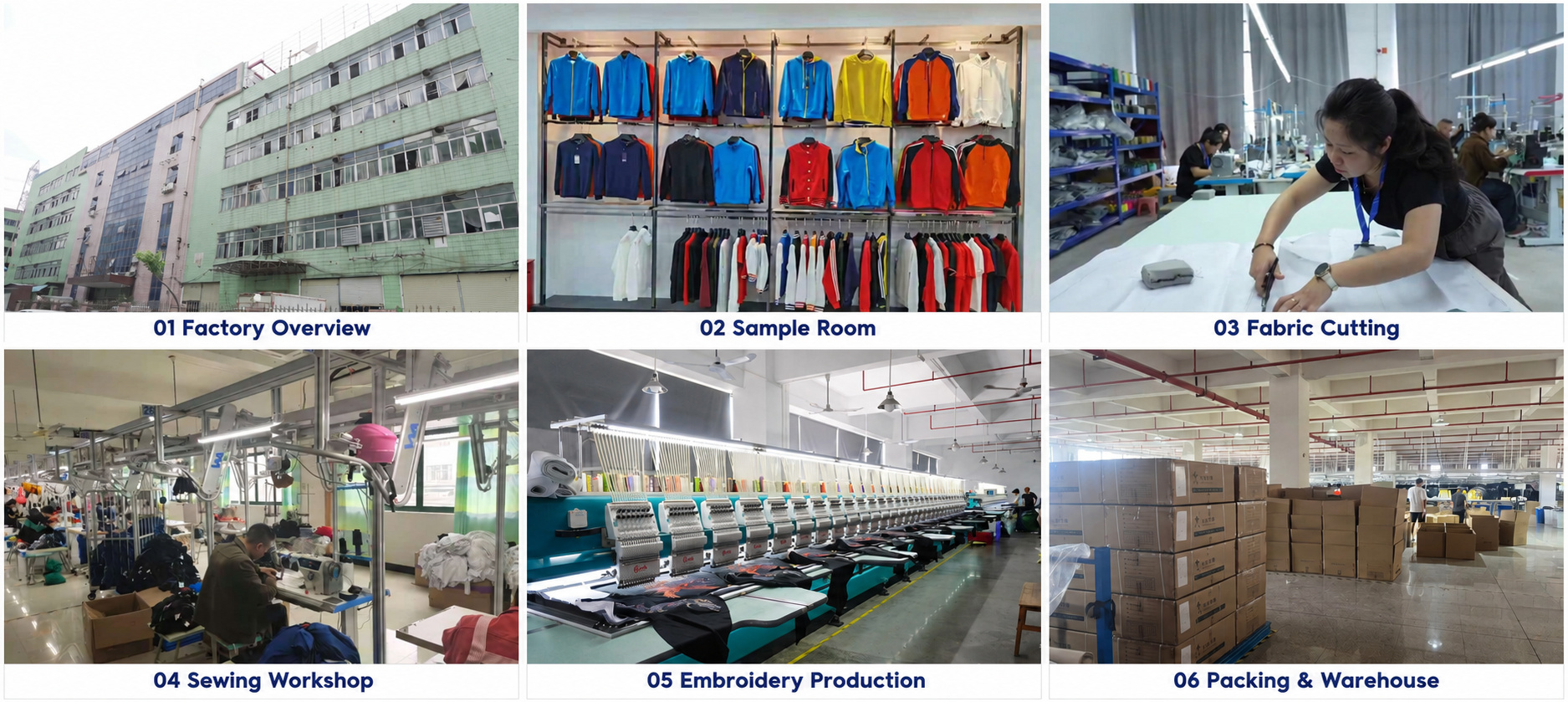
 Manufacturing Around Approved Jacket Specifications
Jaktuno manufactures varsity and letterman jackets in Kuangyan Town, Cixi City, Ningbo, Zhejiang, China. We support apparel brands, private-label buyers, wholesalers, importers and school or teamwear suppliers placing OEM and repeat bulk orders.
Production follows the approved sample, measurement chart, artwork and agreed material and trim details. Before bulk work begins, we confirm the jacket construction, quantities by style/color, size breakdown, labels and packing requirements. These references guide material preparation, cutting, sewing, decoration and final inspection.
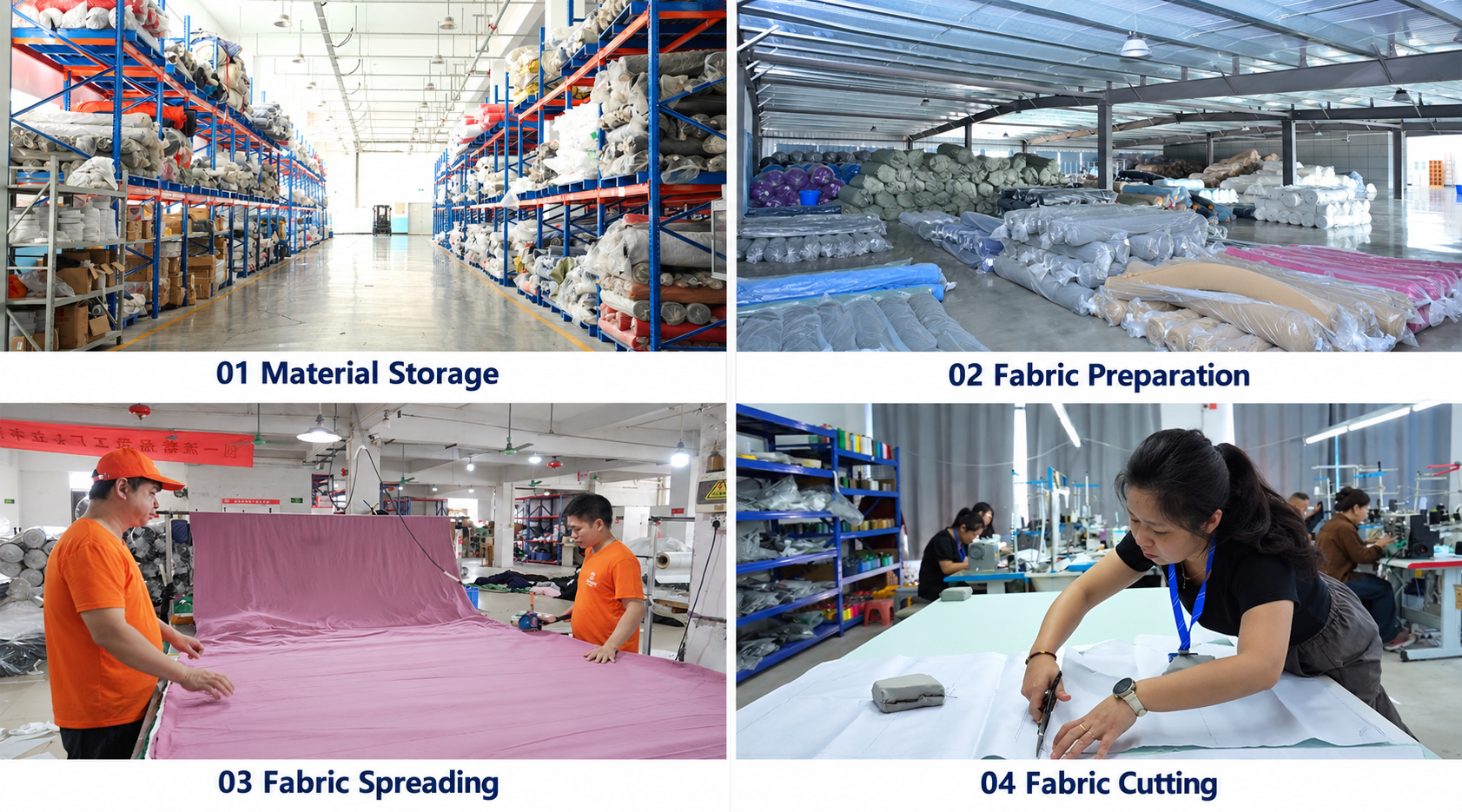
Prepare Fabrics, Sleeve Materials and Trims
Body fabrics, sleeve materials, lining, rib, snaps, zippers and labels are reviewed against the order requirements before use. Checks cover material type, color, visible condition and compatibility with the selected construction.
Wool blends, fleece, satin, denim, PU and genuine leather require different handling. Mixed-material jackets need particular attention to panel combinations and joining points. Our material preparation work establishes the required components before they move into cutting and assembly.
Special materials or newly developed trims can affect the production schedule. Any proposed substitution needs confirmation before it becomes part of the bulk garment.
Develop Patterns, Grade Sizes and Cut Panels
Patterns define the garment shape, panel connections, pocket positions and seam arrangements. The base construction is reviewed against the approved fit before graded sizes are prepared for the ordered range.
Cutting follows the confirmed patterns and material requirements. Body panels, sleeves, lining and smaller components need accurate shapes and suitable matching. Left and right pieces are checked for consistency, while size identification helps keep components together during assembly.
Oversized styles require controlled proportions across shoulders, chest, body length and sleeves. They cannot be developed simply by enlarging every panel equally.
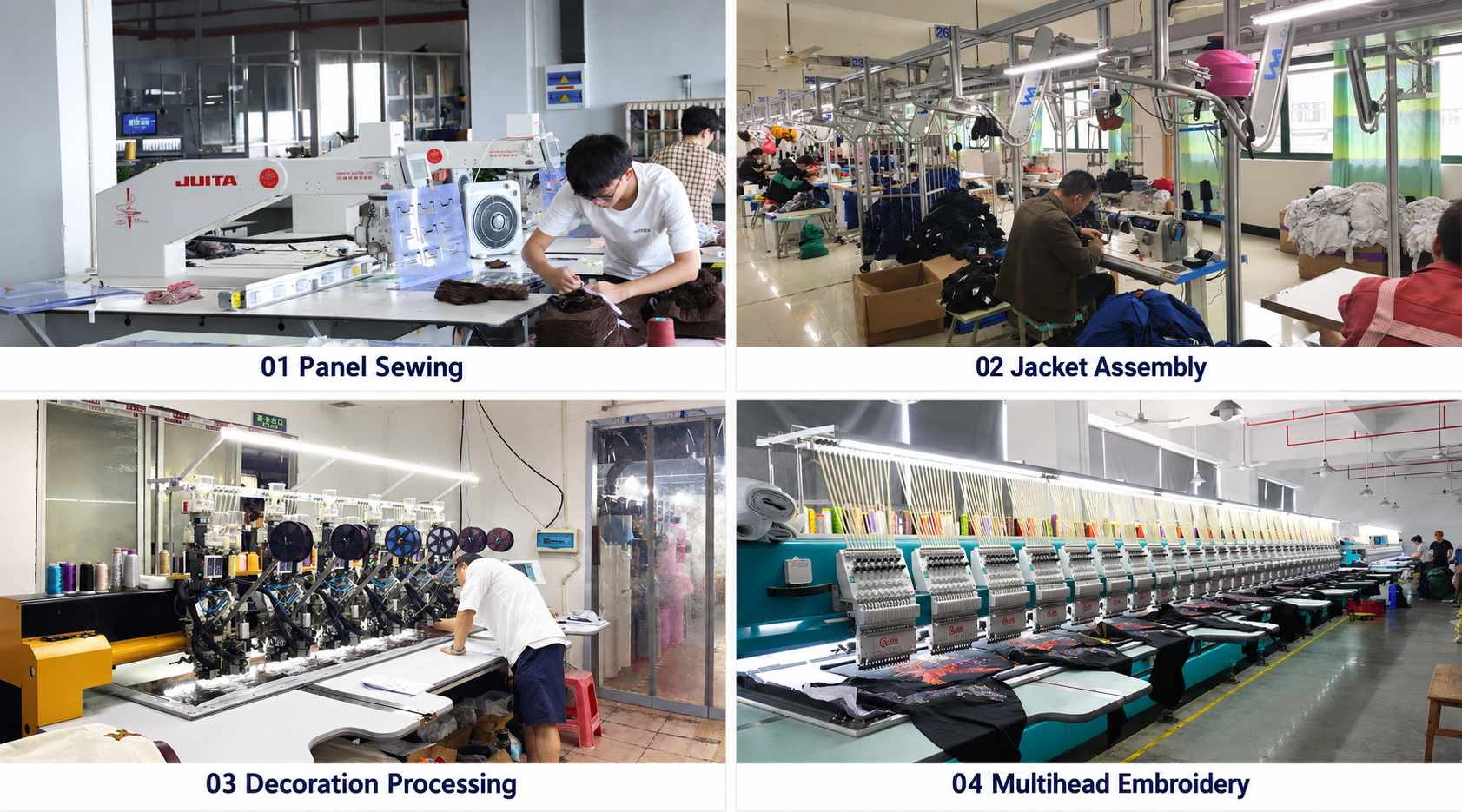
 Sew and Assemble the Jacket Construction
Sewing connects the body, sleeves, pockets, lining, rib and front opening according to the approved construction. Different material thicknesses and surfaces influence how these connections are handled.
In-process checks focus on panel matching, seam appearance, symmetry, pocket position and lining assembly. Rib connections are reviewed for alignment and finished proportions. During sewing and jacket assembly, construction issues are addressed before later operations make corrections more difficult.
Apply Embroidery, Patches and Closures
Decoration is scheduled around the garment structure and artwork location. Direct embroidery or patch work may be completed on panels or at a later assembly stage, depending on access and the required finish.
We compare artwork dimensions, colors, placement and attachment with the approved reference. Large designs and positions near seams, pockets or closures require coordination with construction. The embroidery and patch application stage includes checks of visible stitching, patch edges and installation.
Snaps, zippers and labels are installed in their confirmed positions. Closure checks cover alignment, operation and visible attachment condition.
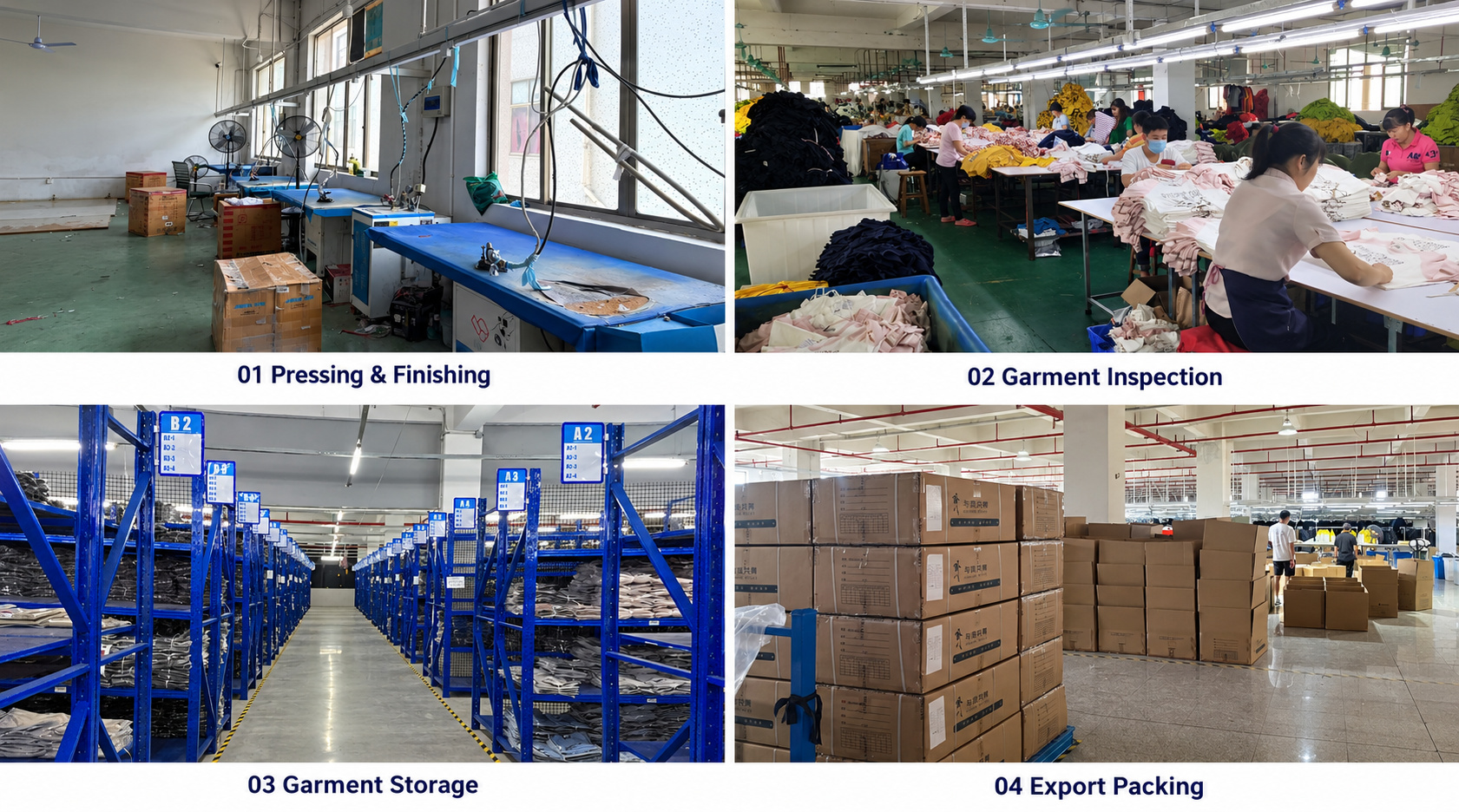
 Finish Garments and Check Bulk Consistency
Finished jackets undergo thread trimming and suitable pressing or finishing. The method must accommodate the body fabric, sleeves and decoration rather than apply the same treatment to every material.
Measurement and appearance checks compare garments with the approved sample and size chart. Review points include stitching, pockets, lining, rib, embroidery, patches, closures and labels. Buyer-requested material testing or third-party inspection can be coordinated when specified. Metal detection can also be included when required.
Pack by Size and Prepare for Export
Approved garments are folded and individually packed using the agreed method. Jacket thickness, raised patches and visible hardware are considered when reviewing folding and protection.
Size assortments, labels, packed quantities and carton marks are checked against the order instructions. Our packing and export preparation work connects the packed goods with shipment requirements before release. Ningbo Port is the nearest major export port, with Shanghai available when appropriate for the shipment plan.
 Confirm Order Conditions Before Production
Standard styles generally start around 100–300 pieces per style. More customized OEM and private-label orders are usually around 300–1,000 pieces per style/color, depending on sourcing, decoration and construction.
Bulk production normally takes around 25–45 days after sample approval and order confirmation. Send your specifications, quantity breakdown, packing requirements, destination and delivery target so we can review the production plan. Special materials, complex decoration and seasonal loading may require additional time.